How Houston's rainfall rates are changing, increasing local flood risk even more


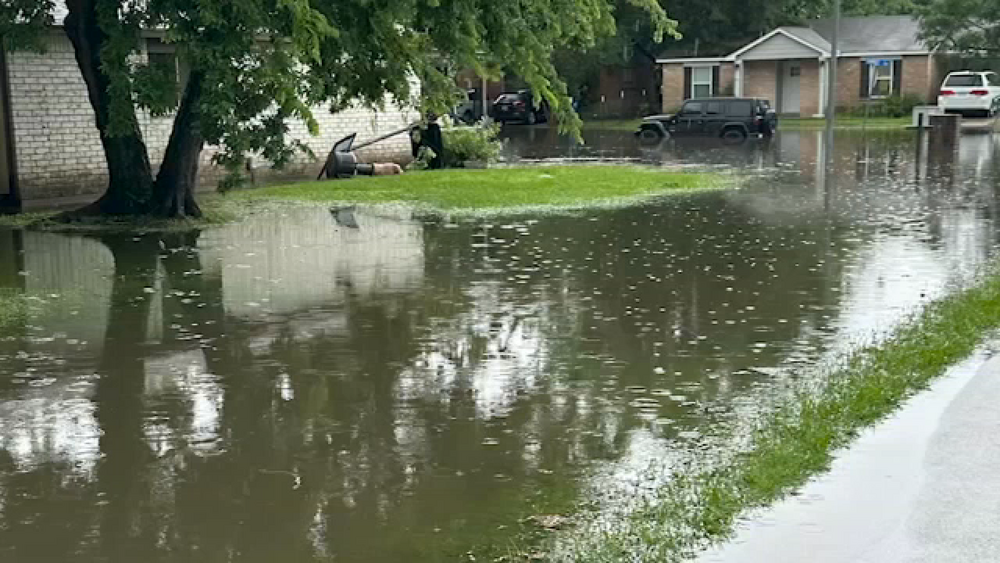
HOUSTON, Texas (KTRK) -- It's no secret that Houston is prone to flooding. Living along the Gulf Coast, the region is susceptible to heavy, tropical downpours that can lead to street and flash flooding on any given day when conditions are right.
Now a new study highlights the increasing risk of flooding due to heavy rainfall rates changing over time.
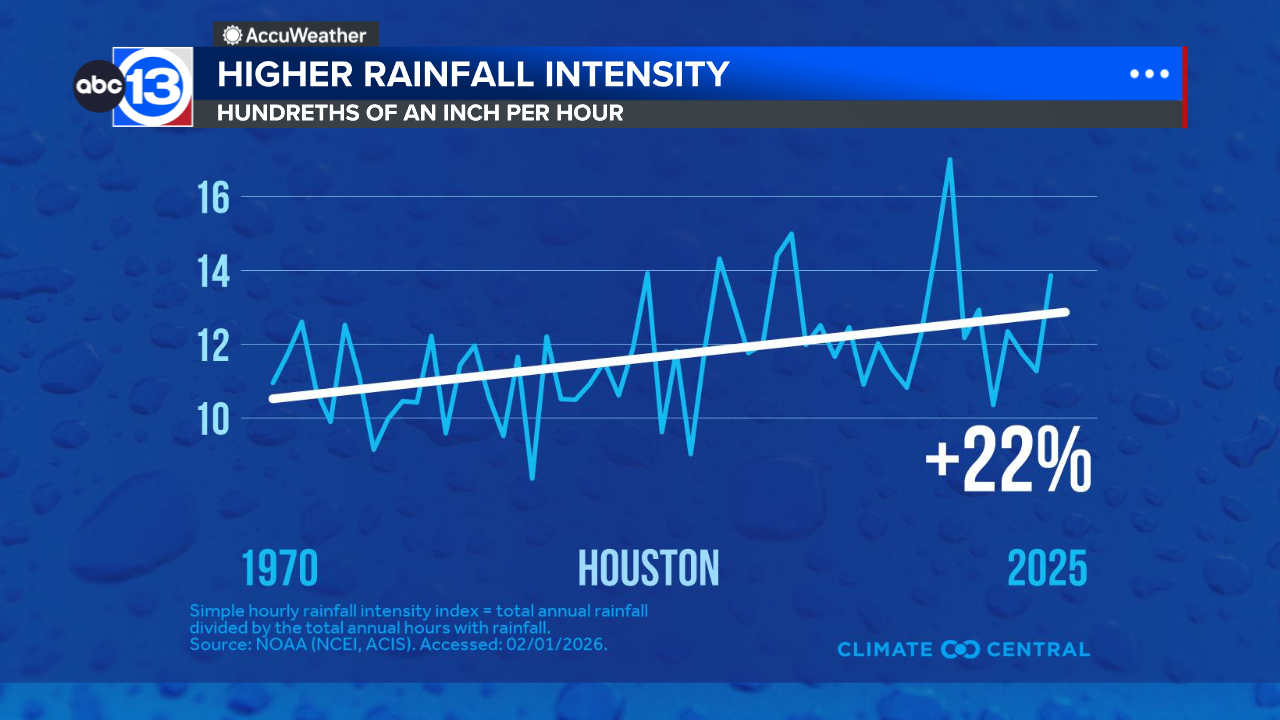
The study from our partners at Climate Central focuses on the amount of rain that falls altogether from showers and storms, specifically rainfall intensity over 50 years at locations across the country.
For Houston, research shows that the rainfall intensity has increased by 22% since 1970. While that might not seem like much, it does add up. For example, take a slow-moving storm producing rainfall rates of two inches an hour. If you factor in findings from this study, and if those rainfall rates persisted for only 2 hours, that's a total of 4.88 inches of rain falling at that location versus 4 inches. That's almost an extra inch of rain in the same amount of time.
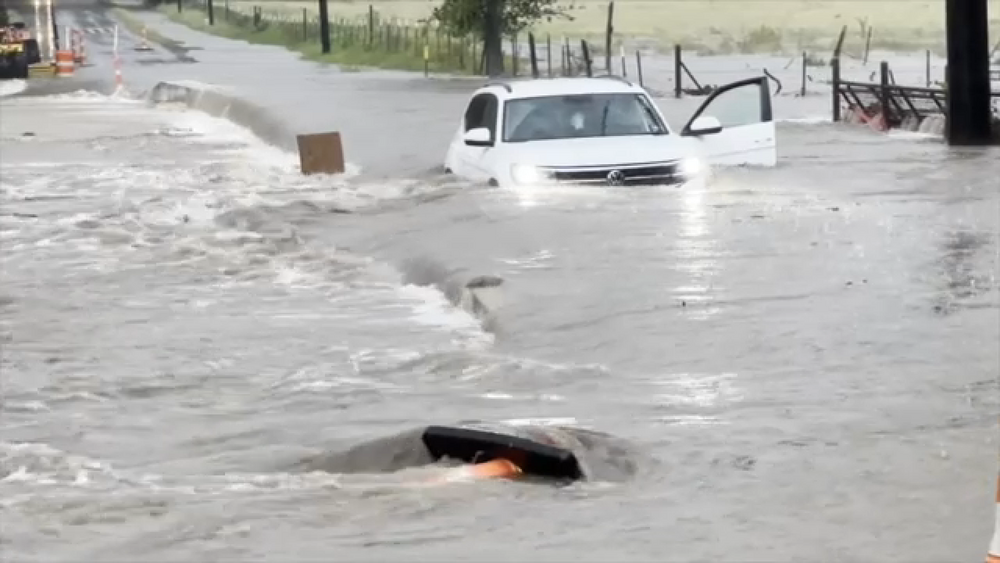
On an average day, rainfall rates in the city of Houston can range between 1 to 3 inches. But when there's deep, tropical moisture overhead, as we can see during the summer months, rainfall rates can reach 6 inches per hour in the strongest storms. And given the topography of Southeast Texas, the clay soil, urban sprawl, etc., all combined with heavy rains, this increases the risk for street flooding and flash flooding.
Climate Central's research also assumes that these changes are occurring as the global climate warms. A warmer atmosphere can hold more water vapor, which is one of the building blocks for showers. In fact, a 1-degree Fahrenheit increase in temperature can lead to a 4% increase in water vapor content. So for a city like Houston, where you factor in urban sprawl, clay soil, and the topography of the region, this all leads to a greater risk for flooding, from everyday rainstorms to the severe storms that can lead to historic flood events.