Hurricane Center has a 10% chance of development in the Gulf

August 29 Update
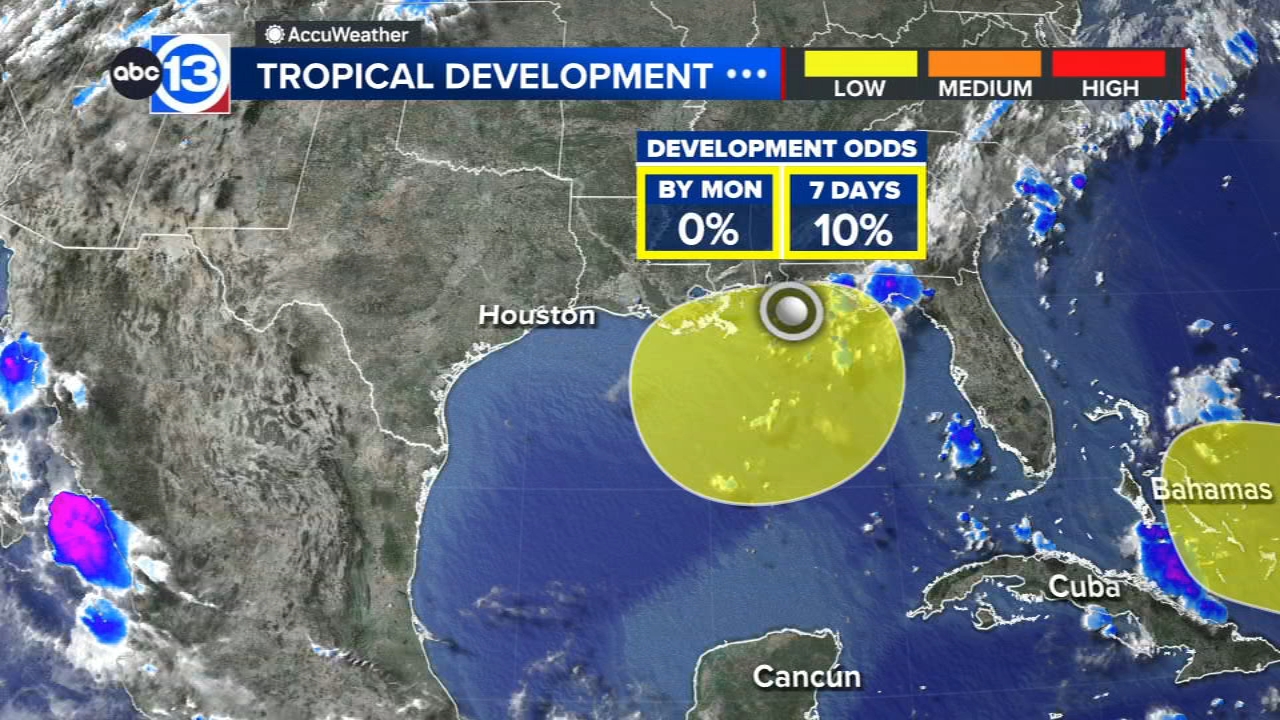
The National Hurricane Center has tagged a disturbance in the Eastern Gulf with a 10% chance of potential development. While our overall level of concern is fairly low, we do expect it will gradually slide west, increasing moisture in our neck of the woods and bringing back more legitimate rain chances by Tuesday.
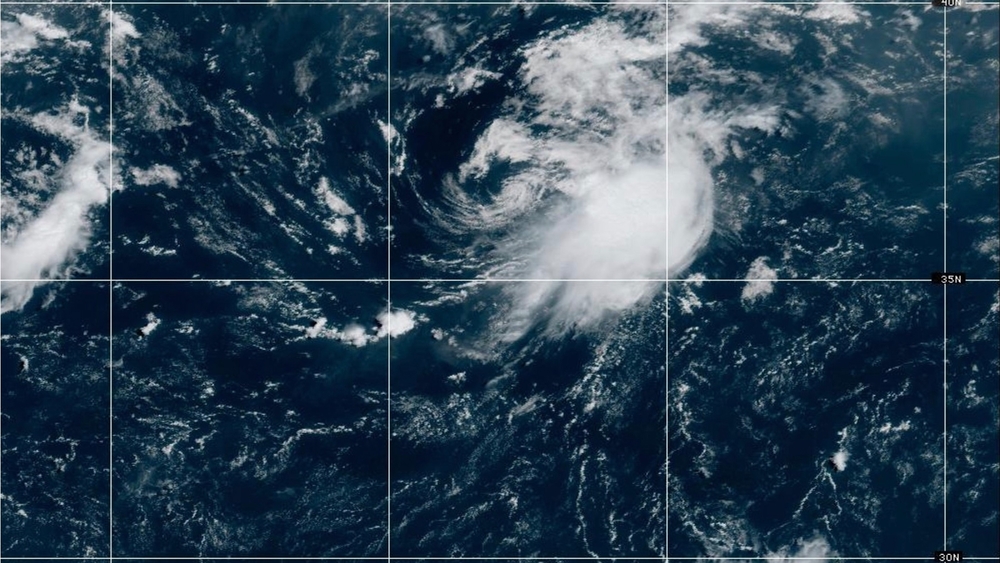
Elsewhere, the remnants of Tropical Storm Dolly continue towards the Caribbean. Again, development odds are low, but it's worth keeping an eye on over the next few days.
August 28 11 AM Update
Dolly has weakened into an open tropical wave. The remnants are moving west at about 25 mph and could reach the Leeward Islands Saturday night into Sunday. Winds are still near 40 mph, but they're expected to weaken below tropical-storm strength Saturday. Heavy rain could impact the Leeward Islands, with rain spreading to the Virgin Islands, Puerto Rico and Hispaniola Sunday into Monday. Flash flooding is possible.
August 28 7:30 AM Update
Tropical Storm Dolly is moving quickly west at about 24 mph. It could approach the Leeward Islands this weekend, but Dolly is expected to weaken into a tropical wave before reaching the islands. Dolly has maximum winds of 40 mph, with stronger gusts. Heavy rain could reach the Leeward Islands late Saturday into Sunday, with rain spreading toward the Virgin Islands, Puerto Rico and Hispaniola Sunday and Monday. Flash flooding is possible.
August 27 10:30 AM Update
Tropical Storm Dolly has formed over the central Atlantic, about east of the Leeward Islands. Dolly has winds of around 40 mph and is moving west at about 24 mph. Dolly is expected to approach the Caribbean islands this weekend, although the latest forecast has it weakening into a tropical wave before reaching land. Heavy rain could begin affecting the Leeward Islands late Saturday into Sunday, followed by the Virgin Islands, Puerto Rico and Hispaniola Sunday into Monday. The rain could lead to flash flooding, especially in mountainous areas.
August 27 7 AM Update
A tropical wave southwest of the Cabo Verde Islands has become better organized, with stronger showers and thunderstorms. If it continues to strengthen, it could become a tropical depression or tropical storm later today. However, conditions are expected to become less favorable starting Friday, which could stop further development. Formation odds have increased to 90% over the next 48 hours.
August 26 Update
A tropical wave several hundred miles southwest of the Cabo Verde Islands is producing showers and thunderstorms. Conditions are favorable enough for it to become a tropical depression within the next day or two. It is expected to move west to west-northwest across the central Atlantic. The chance of development is 60% over the next 48 hours. There is no immediate threat to the U.S. at this time.
August 25 Update
There are two areas with tropical development potential over the next 7 days. A low near Bermuda is moving north. It could briefly become a tropical depression or storm today, but unfavorable conditions should limit development by tonight or Wednesday. Meanwhile, in the eastern Atlantic, a low south-southeast of the Cabo Verde Islands has a better chance of developing as it moves west across the Atlantic. Formation odds have increased to 70%. This system could become a tropical depression over the next few days as it moves west to west-northwest across the Atlantic. However, conditions may become less favorable for development by the weekend.
August 24 Update
A tropical wave that is just now rolling off the coast of Africa is worth keeping an eye on. Right now the NHC has placed development odds at 60% on this budding system, but most forecast models are fairly confident it will become our next named storm. The good news here is that earlier and stronger development also likely means an earlier turn to the north, and the overwhelmingly likely outcome is a storm that turns north long before it ever reaches the US. We'll keep watching it, but the concern level here is low.
Another system is gradually lifting north as it parallels the eastern seaboard, impacts here in Texas are zero, and impacts to the US in general are minimal.
August 23 Update
There are 3 areas that are currently tagged for potential development in the Atlantic Basin, but only one of those has even the potential to impact the US. A tropical wave in the open Atlantic is now tagged with a 50% chance of development as it moves west across the Atlantic. While it's still a long way away, forecast models have been fairly aggressive in developing this potential storm. The likely outcome is an eventual named system which curves north before ever reaching the US, but we have plenty of time to keep an eye on it. I'm also seeing a few models trying to pop a storm in the Gulf in the first week of September, that's far from a lock, but is something we will be watching closely as we enter the peak of hurricane season.
August 22 Update
Tropical activity has increased over the Atlantic as we monitor three tropical waves for development. A strong area of low pressure is several hundred miles west of Portugal. It could briefly take on some tropical or subtropical characteristics today or Sunday as it moves toward Portugal and northwestern Spain. Formation odds at 20 percent through the next 7 days. In the Central Atlantic, some disorganized showers near Bermuda has a low chance for development, 20 percent. Finally, a tropical wave is expected to move off the coast of Africa early next week. Development will be slow to occur as this system tracks west toward the Caribbean. Formation odds at 30%.
Meanwhile in the Pacific, the Hawaiian islands preparing for another tropical storm to bring heavy rain and gusty winds. Tropical Storm Moke is forecast to gradually strengthen during the next day or two, followed by a steady weakening trend as the storm passes well south of the smaller main Hawaiian Islands early next week.
August 21 Update
Tropical Depresstion Two has formed in the central Pacific and is forecast to become Moke over the next 24 hours. Heavy rain and large waves is expected to impact parts of the Hawaiian islands for a second weekend in a row as the center of the system passes south of the Big Island of Hawaii and then the smaller main Hawaiian Islands by early next week. Lala remains a hurricane as it moves deeper into the central Pacific.
A couple of areas are being monitored in the Atlantic, but neither is a threat to the Gulf. One low-pressure system north of the Azores could briefly take on some tropical or subtropical characteristics this weekend as it moves toward Portugal and Spain. The chance of development is low, around 20%. Another weak low east-southeast of Bermuda is producing some disorganized showers and storms. Any development is expected to be slow, and the system will drift west before turning north early next week.
August 20 Update
Lala remains a strong hurricane as it nears the northwestern Hawaiian Islands. Tropical and hurricane warnings remain in effect. Showers and thunderstorms are getting better organized around a low-pressure system well east-southeast of Hawaii. Conditions are favorable for this system to strengthen, and a tropical depression could form as soon as tonight or Thursday.
Meanwhile in the Atlantic, we are watching some tropical waves and Saharan dust emerging from Africa. Tropical development is not expected over the next 7 days.
August 19 Update
Lala becomes a category 4 hurricane and expected to impact the northwestern Hawaiian islands. Tropical storm and hurricane warnings have been issued as large waves will begin to develop. Meanwhile in the Atlantic, we are watching some tropical waves and Saharan dust emerging from Africa. Tropical development is not expected over the next 7 days.
August 18 Update
Lala has restrengthened to a hurricane as it moves farther away from Hawaii. Lala is expected to remain a hurricane for the next several days as it remains over the central Pacific. Meanwhile in the Atlantic, we are watching some tropical waves and Saharan dust emerging from Africa. No tropical development is expected over the next 7 days.
August 17 Update
Tropical Storm Lala continues to weaken as it pulls away from the Hawaiian islands. Potential for heavy rain and isolated flooding concerns continue through Monday before tapering off. Meanwhile in the Atlantic, no tropical development is expected over the next 7 days.
August 16 Update
Hurricane Lala retains its strength this morning as a category 1 storm as it passes by the Hawaiian Islands. The storm will continue to bring storm force winds and torrential, flooding rains to the islands as it passes by, though will move away from the state late Sunday. There are also two other areas to monitor for potential tropical development in the Pacific. Meanwhile in the Atlantic, no tropical development is expected over the next 7 days.
August 15 PM Update
Lala has become a Hurricane off the coast of Hawaii. The center is expected to pass just south of the island but the dirty side of the storm will spread heavy, flooding rains, a 103' storm surge, and 70+ mph winds onshore through the weekend. Development odds in the Atlantic have dropped to zero.
August 15 Update
The tropical wave that passed by the Windward Islands Friday now has a 0% chance of forming into a tropical system in the southern Caribbean. This is due to unfavorable conditions with wind shear play a big role in that. It's also why there's now only a 20% chance for the tropical wave in the central Atlantic to develop too. As this wave approaches the Caribbean next week, it'll also run into a region of wind shear that would make it difficult for a tropical system to form.
Meanwhile in the Pacific, Tropical Storm Lala will pass by Hawaii Saturday and could bring hurricane force winds and flooding to the Big Island.
August 14 6 a.m. Update
Two named storms in the Pacific, but only one could bring hurricane conditions to Hawaii this weekend. Tropical Storm Lala forecast to become a hurricane as it approaches the big island of Hawaii by Saturday. Hurricane conditions are expected on the Big Island of Hawaii by early Saturday, with tropical storm conditions possible in Maui County by late Saturday. Rainfall totals of 8 to 12 inches across Maui and the Big Island with maximum totals of 25 inches possible across the Big Island.
Meanwhile in the Atlantic, there are two tropical waves to watch. A tropical wave about 650 miles east of the Lesser Antilles is becoming less organized. Stronger winds higher in the atmosphere and dry air are making development less likely. Another tropical wave, southwest of the Cabo Verde Islands, is producing disorganized showers and thunderstorms. Conditions are favorable for gradual development, and this system could become a tropical depression during the next 7 days. Formation odds around 50%.
August 13 11 a.m. Update
Cristobal dissipates over the northern Atlantic. The National Hurricane Center has issued its final advisory.
August 13 7 a.m. Update
Cristobal weakens to a Tropical Depression and is expected to dissipate. We are also monitoring the deep tropics as tropical activity begins to ramp up. One wave has a high chance of becoming the next named storm, Dolly, as it approaches the Windward Islands this weekend. We have plenty of time to monitor it, and there is no threat to the Gulf or Houston at this time.
August 12 10 a.m. Update
We now have Tropical Storm Cristobal in the North Atlantic with winds of 45 mph and gusts up to 60 mph. This will be a short-lived tropical storm as it speeds across the North Atlantic at 25 mph, likely dissipating tomorrow. Meanwhile, we're keeping a close eye on the deep tropics with the tropical wave train getting going. One wave has a high likelihood of becoming the next named storm, Dolly, as it approaches the Windward Islands this weekend. We've got plenty of time to watch it, though it poses no threat to the Gulf or Houston at this time.
August 12 Update
There are three areas of potential development in the Atlantic with one that has a high likelihood of becoming the next named storm of the season. This tropical wave in the central Atlantic is now invest 92L, and as of Wednesday morning the swirling area of showers and storms is looking more like a tropical system and could become a tropical depression heading into the weekend. Current spaghetti model plots send this potential storm into the Caribbean next week, though some have it still hugging the eastern Caribbean in the Atlantic Ocean. At this time this tropical wave does not pose a threat to the gulf or Houston, and we have plenty of time to watch it.
Behind this wave in the deep tropics there another wave of showers and storms near the Cabo Verde Islands that has a low chance of developing. Then the tropical wave in the north Atlantic now has 50/50 odds of becoming a tropical system too.
August 11 Update
We're continuing to monitor three areas of potential development in the Atlantic. One in the northern Atlantic has low odds of developing as well as the wave closest to the Caribbean in the deep tropics. The one wave to monitor that could become a tropical storm is in the central Atlantic. A region of low pressure and thunderstorm activity currently 500 miles to the southwest of the Cabo Verde Islands will be moving into a region that will favor potential tropical development. That wave now has a 70% chance of developing into a tropical system over the next 7 days.
Then in the Pacific there are two areas of shower and storm activity that have medium to high odds of forming over the next 7 days.
August 10 Update
The Atlantic basin has come alive with three areas to monitor for tropical development over the next 7 days. The Atlantic has come alive this week. Three waves to watch: A tropical wave midway between Africa and the Lesser Antilles has a 10% chance of development over the next 7 days as it moves west. Disorganized showers and storms south of the Cabo Verde Islands could become more organized later this week. 60% chance of development over 7 days. This is the area we're watching most closely. A weak system near Bermuda has just a 10% chance of development before cooler water shuts it down later this week. No immediate tropical threats to land, but the eastern Atlantic bears watching later this week.
August 9 Update
As expected this time of year, things are getting a bit more active in the Atlantic! We now have two areas of potential development being monitored by the National Hurricane Center, one with 20% development odds, then a follow-up wave behind it at 40% odds. A few bits of good news here: First, these waves are still way out in the Atlantic, closer to Africa than the Caribbean, so we have plenty of time to keep an eye on them. Second, most long-range forecast models either curve a storm north well ahead of reaching the US, or it brings a storm into the Caribbean, where high wind shear brings an unfavorable storm environment, and leads to a storm that quickly decays before making it into the Gulf. We'll keep a close on eye things as always, but the overall concern level here is low.
August 8 Update
After a quiet stretch in the tropics following Bertha, we have a new area of potential development to monitor off the coast of Africa. The National Hurricane Center is currently putting 20% development odds on the system, which is one of many tropical waves in the area. The good news for us is that high wind shear in the Caribbean will make any development closer to home very difficult, and it's unlikely this system ever makes it into the Gulf.
August 7 Update
NOAA is doubling down on a "quieter than average season", updating the official hurricane forecast with even lower numbers than the initial forecast in May. A record-breaking El Nino is the main reason for the updated forecast, with El Nino years bringing an increase in wind shear to the Gulf and Caribbean, and lessening storm development odds. No tropical development is expected over the next 7 days.
August 6 12 p.m. Update
NOAA released their August update to the 2026 hurricane outlook, and they have dropped the total number of named storms and major hurricanes expected by one storm each. The primary driver in this year's hurricane season is a rapidly strengthening El Nino in the Pacific, which tends to bring high wind shear over the Atlantic that cuts down on the number and strength of storms. Watch the video update for a more in-depth look from Chief Meteorologist Travis Herzog on how this El Nino will impact the hurricane season ahead with specific implications for Texas.
August 6 Update
While the Atlantic remains quiet, the Pacific is turning more active. A tropical wave in the eastern Pacific is only producing a few showers and thunderstorms, but it's moving into a much drier environment, so tropical development is low at 20 percent.
Another disturbance in the Pacific has a 30 percent chance of forming into a tropical depression as it tracks west at 10 to 15 mph. At this point, neither of these disturbances will be a threat to land.
August 5 Update
The Atlantic basin remains quiet as Saharan dust and strong wind shear keeps atmospheric conditions unfavorable for tropical development over the next 7 days.
In the Pacific, we are monitoring two tropical waves for tropical development. One wave is producing showers and thunderstorms, but development remains unlikely. Chance of development: 20% over the next 7 days.
A second tropical wave is expected to move into a slightly more favorable environment this weekend. Formation odds are also near 20%. No immediate tropical concerns with either of the waves.
August 4 Update
A widespread plume of Saharan dust remains stretched across much of the tropical Atlantic, helping keep tropical activity at a minimum. The dry, dusty air limits thunderstorm development and makes it harder for tropical systems to strengthen. No areas of concern are expected over the next seven days.
August 3 Update
A large plume of Saharan dust continues to blanket much of the tropical Atlantic, helping keep the basin quiet with no immediate areas of concern for tropical development. The dry, dusty air suppresses thunderstorms and makes it more difficult for tropical systems to organize. While we're entering the heart of hurricane season, conditions remain unfavorable for development over the next 7 days.
August 2 Update
August is typically when the tropics start coming to life in the Atlantic Basin, but so far, so good. No tropical development is expected over the next 7 days, partly due to a wide swath of Saharan dust blanketing much of the Caribbean and main development zone of the Atlantic.
August 1 Update
All quiet in the Atlantic Basin as we kick off August. No development is expected over the next 7 days. Now is the time to remain vigilant, as tropical activity typically ramps up dramatically later this month.
July 31 Update
The Atlantic basin remains quiet as Saharan dust and strong wind shear keeps atmospheric conditions unfavorable for tropical development.
In the eastern Pacific, Genevieve is now a tropical storm and is located southwest of Mexico. Dangerous rip currents will continue along the west coast of Mexico and Southern California. Gradual weakening is forecast during the next few days, and Genevieve is expected to become a remnant low over the weekend.
July 30 Update
Fausto has dissipated. Meanwhile, Genevieve is a Category 1 hurricane. It will generate large swells along the beaches of Southern California this week, but is not expected to directly impact land.
In the Atlantic, there is nothing of interest in the near term. Saharan dust and strong wind shear will keep atmospheric conditions unfavorable for tropical development.
July 29 Update
The Pacific remains much more active than the Atlantic right now. Fausto has weakend to a Tropical Depression as it continues to track north of the Hawaiian islands. Surf generated by Fausto will remain dangerous on Wednesday as Fausto passes north of the islands. Large surf and strong currents will lead to dangerous conditions along exposed shores.
Hurricane Genevieve remains a major hurricane at Category 3 strength. Some weakening is expected during the next few days, but Genevieve is forecast to remain a hurricane through Thursday night or early Friday. Swells generated by Genevieve will continue to affect portions of the Baja California Peninsula and will reach Southern California on Wednesday. These swells will persist for the next several days and are likely to cause life-threatening surf and rip current conditions.
Meanwhile, the Atlantic Basin remains quiet, with Saharan dust and strong wind shear keeping tropical development at bay.
July 28 Update
Two named storms in the Pacific. Tropical Storm Fausto continues to track toward the Hawaiian Islands. A steady weakening trend is expected before arrival, but Fausto could still bring periods of rain and gusty winds to Hawaii during the middle of next week. Meanwhile, Genevieve remains a Category 4 hurricane after briefly becoming a Category 5 hurricane yesterday. It will generate large swells along the beaches of Southern California this week but is not expected to directly impact land.
In the Atlantic, there is nothing of interest in the near term as a large plume of Saharan dust and high wind shear will limit any tropical development.
July 27 Update
In the Atlantic, tropical development remains unlikely for now as a large plume of Saharan dust covers much of the basin.
In the Pacific, Hurricane Fausto continues to track toward the Hawaiian Islands. A steady weakening trend is expected before arrival, but Fausto could still bring periods of rain and gusty winds to Hawaii during the middle of next
week. Genevieve is now the first major hurricane of the 2026 eastern Pacific hurricane season. It will generate large swells along the beaches of Southern California this week but is not expected to directly impact any land.
July 26 Update
The most noteworthy news for us is nice and simple: No development is expected in the Atlantic basin over the next week. That means we'll close out July with no tropical development in the Gulf, Caribbean, or Atlantic. While things are nice and quiet locally, the Pacific basin is a different story. Major hurricane Genevieve off the west coast of Mexico is bringing 130mph winds and expected to strengthen, though will likely not directly impact land. Hurricane Fausto could brush the northern side of the Hawaiian islands in the coming days as a tropical storm or depression.
July 25 Update
Bertha is long gone, and the Atlantic basin is nice and quiet behind it. No development is expected over the next 7 days, thanks in part to a good deal of Saharan dust in the Caribbean and Atlantic.
July 24 Update
Remants from Bertha moves into Mexico Friday. The tropics will remain quiet for the next seven days as a large plume of Saharan dust remains draped from the Caribbean into the Atlantic basin.
July 23 7 PM Update
Bertha's is now tropical depression with 35 mph winds as the circulation tracks directly over Houston. Street flooding is still possible in the heavier thunderstorms near the circulation center. Meanwhile, winds are picking up along the coast with gusts over 30 mph reported in Galveston. It will be breeze at times through the night, but we are basically done with Bertha's impacts by sunrise Friday.
July 23 1:30 PM Update
Tropical Storm Bertha's circulation is now in Texas, pushing tropical rains and some wind into the coastline. On its current track, the center of circulation should track over or near Houston sometime this evening. The strongest storms and highest winds remain displaced far away from the center, taking aim more at the middle and lower Texas coastlines. The system is expected to dissipate inland over Texas tonight or Friday morning.
July 23 10 AM Update
Tropical Storm Bertha continues to move west along the southwest coast of Louisiana with sustained winds of 45 mph. Little change in strength is expected as it makes landfall along the upper Texas coast between Brazoria county to near the Texas-Louisiana border. The system is expected to dissipate inland over Texas late Thursday night into Friday.
July 23 7 AM Update
Tropical Storm Bertha is moving west near the coast of Louisiana with sustained winds of 45 mph and gusts up to 65 mph. The center has drifted to the north, but a generally motion to the west is expected through Thursday night, followed by a turn toward the west-southwest on Friday. On the forecast track, the center of Bertha will move near or along the Louisiana and upper Texas coasts through Thursday afternoon, and then move farther inland over Texas on Friday. A Tropical Storm Warning remains in effect for coastal sections of Brazoria, Chambers, Galveston, and Jefferson Counties. A second landfall of Bertha is expected here in Southeast Texas Thursday afternoon. Scattered thunderstorms are expected inland with gusty winds over 50 mph possible in our coastal counties.
July 22 7:30 PM Update
Tropical Storm Bertha is maintaining 40 mph sustained winds with gusts up to 65 mph. The center has started to move more to the southwest and should emerge over the Gulf waters tonight. A Tropical Storm Watch remains in effect for coastal sections of Brazoria, Chambers, Galveston, and Jefferson Counties. We are preparing for a second landfall of Bertha here in Southeast Texas tomorrow. Scattered thunderstorms are expected inland with gusty winds over 50 mph possible in our coastal counties Thursday afternoon.
July 22 1:30 PM Update
Tropical Storm Bertha remains disorganized and is weakening. The pressure has risen to 1000 millibars and the winds have dropped down to 40 mph. Bertha should make landfall in Louisiana this afternoon. The next forecast track and intensity update from the National Hurricane Center will arrive by 4 p.m. A Tropical Storm Watch remains in effect for coastal sections of Brazoria, Chambers, Galveston, and Jefferson Counties with minimal disruptions expected as Bertha blows through Southeast Texas tomorrow.
July 22 10:30 AM Update
The new National Hurricane Center forecast track for Bertha shows a minimal tropical storm passing somewhere near Houston and Galveston tomorrow evening. Bertha still has winds of 50 mph with the center exposed and all the main thunderstorms getting blown by wind shear far away over the Gulf. The center should reach Louisiana this afternoon. It is possible a new center could form closer to the larger storms over the Gulf, but the impacts for us will remain the same tomorrow. We have a chance for scattered downpours with tropical-storm-force winds possible along our coast. A Tropical Storm Watch continues for coastal regions of Brazoria, Chambers, and Galveston counties.
July 22 7:15 AM Update
A Tropical Storm Watch has been issued along the coast. The following areas are included in the watch: Galveston Island, Bolivar Peninsula, Coastal Galveston, Chambers, Coastal Brazoria, and Brazoria Islands.
July 22 7 AM Update
Bertha continues to track toward Louisiana with winds at 50 mph. The track takes the center toward Louisiana's coast on Wednesday. Its main impact day for southeast Texas is Thursday. The official forecast calls for low-end tropical storm or tropical depression type weather in southeast Texas. Mainly scattered showers and gusty winds. There are some models that track the storm a bit farther south, and intensify it more than the current forecast suggests.
July 21 10 PM Update
Bertha's winds remain at 60 mph in the 10pm update. The track remains about the same but the timing is speeding the storm's arrival up. It's main impact day is southeast Texas is Thursday. The official forecast calls for low end tropical storm or tropical depression type weather in southeast Texas. Mainly scattered showers and gusty winds. There are some models that track the storm a bit farther south, and intensify it more than the current forecast suggests. This is something we will be watching for on Wednesday. Stay tuned!
July 21 7 PM Update
Bertha's strength has leveled off for now, but the National Hurricane Center forecast now calls for it to remain a tropical storm as it approaches the Texas-Louisiana border. Tropical Storm Watches have been extended westward to Cameron, Louisiana. Some rain impacts are still expected in Southeast Texas on Thursday, and while tropical storm wind impacts are unlikely, it's a possibility we cannot completely rule out at this time.
July 21 10 AM Update
Hurricane Hunters found Bertha strengthen with maximum sustained winds stayed at 60 mph. The other change in the 10am advisory is the system is moving slower at 3 mph.
July 21 6 AM Update
Bertha continues to strengthen over the northeastern Gulf. Sustained winds near 50 mph. Tropical storm watches and warnings remain in effect for parts of the north Gulf coast. Bertha is expected to turn more westward Wednesday, but increasing wind shear and interaction with the Louisiana coast should create a more hostile environment for strengthening. Track and intensity uncertainty remains higher than normal beyond Wednesday. If Bertha survives, it could approach the Southeast Texas coast as a tropical depression Friday.
July 20 10 PM Update
Hurricane Hunters found Bertha slightly stronger from a air pressure perspective, but the maximum sustained winds stayed at 40 mph. Typically when the pressure falls, the winds increase. That will probably happen overnight. The other change in the 10pm advisory is a slightly more southern track. That means the storm might be a little stronger than a depression when it arrives here Friday night. Stay tuned!
July 20 7 PM Update
It's official: Tropical Storm Bertha is now spinning in the eastern Gulf near the Florida Panhandle. It is still expected to slowly churn toward Louisiana through Wednesday with some slight strengthening possible. Dry air and wind shear continue to limit the storm for gaining strength, and those basic elements should remain in place. We still expect moisture form this system to impact Texas Thursday and Friday, but it's too soon to know if it will just be the remnant moisture of Bertha or a more coherent circulation that could also bring wind in addition to the chance for rain. While our concern level remains low at this time, we encourage you to keep your guard up for the time being just in case Bertha does something unexpected.
July 20 4 AM Update
Tropical Depression Two has strengthened slightly as it slowly churns in the Gulf, maximum sustained winds are now 35mph as it moves northwest at just 3mph. TD2 is forecast to reach Tropical Storm strength later today, at which point it will become TS Bertha. The storm will slowly be approaching Louisiana through Wednesday, where some models prefer an inland track, dissipating the storm. Other models keep the storm just off the coast of Louisiana, eventually pushing the storm towards Texas sometime late-Thursday through early Saturday. The current forecast strength of the storm according to the NHC as it approaches Texas would be a 35mph Tropical Depression, but it's worth noting that a more southerly track would likely produce a stronger storm. Bottom line, Houston *is* in the cone, and we should all be prepared for a potential storm, but there is still a lot of uncertainty and impacts to Texas are highly uncertain.
July 19 10AM Update
Tropical Depression Two has officially formed in the eastern Gulf, and it's expected to strengthen into Tropical Storm Bertha within the next 48 hours. The current NHC track has the storm drifting slowly northwestward through Tuesday, then accelerating west beyond that. If the storm does impact Texas, we are likely looking at a Thursday-to-Friday timeframe.
There's still a fair amount of uncertainty regarding the exact eventual path of this storm, and hurricane hunters are scheduled to fly through the storm today to gather data.
July 19 Update
Development odds on our eastern Gulf disturbance continue to climb, now up to 80%, and it is likely we will have a tropical depression or Tropical Storm Bertha in the next 24 hours. The National Hurricane Center included this tidbit in their tropical outlook: "interests along the northern Gulf coast from Florida, Alabama, Mississippi, and Louisiana should monitor this system", with "Texas" being notably absent from that statement. That's because the likely outcome from this system remains a progression to the northwest, eventually impacting areas between the Florida panhandle and Louisiana. While an impact to Texas is currently unlikely, it is not currently impossible (a few models actually do favor a more westward path). If the storm were to continue farther west into Texas, our impact timeframe would likely be around Thursday of this week, but again I'll stress that a Texas impact is an unlikely outcome. Hurricane hunters flying through the storm today will give us a better idea on the structure of the storm and the eventual destination.
July 18 Update
We're keeping a close watch on an area of potential development in the eastern Gulf. Current development odds are up to 30% over the next 7 days. There is still some uncertainty regarding where exactly this developing low pressure will end up, though most forecast models slowly drift it north and keep it far away from Texas. It remains worthy of watching in the coming days in case more models try to pull it west, but the overall concern level is fairly low for us here in Texas.
July 17 Update
An area of deep tropical moisture in the eastern Gulf has a 20% chance for development according to the National Hurricane Center. This moisture and developing system could drift west in our general direction, but high pressure building over Texas should help steer any potential storms away from Texas and into Mexico. Elsewhere, a weak system in the eastern Atlantic just rolling off the coast of Africa near the Cabo Verde islands has just a 10% chance of development.
July 16 Update
We are monitoring two areas for tropical development over the next seven days. The National Hurricane Center has tagged a potential development zone in the eastern Gulf. Formation odds are low for now at twenty percent. If anything develops in this area, it would most likely move toward the Florida Panhandle. The other area is over the eastern Atlantic near the Cabo Verde Islands. This system has a ten percent for development over the next seven days.
In the eastern Pacific, Tropical Storm Elida continues to spin away from the southwest coast of Mexico. This system is expected to strengthen over the next several days but remain over water. No impacts to land at this time.
July 15 Update
The National Hurricane Center has tagged a potential development zone in the eastern Gulf. Formation odds are low for now at twenty percent. If anything develops in this area, it would most likely move toward the Florida Panhandle.
In the eastern Pacific, Tropical Storm Elida has formed off the southwest coast of Mexico. This system is expected to strengthen over the next several days but remain over water. No impacts to land at this time.
July 14 Update
No tropical development expected over the next 7 days over the Atlantic, Caribbean or Gulf. A large plume of Saharan dust remains in place this week, so development looks unlikely.
The Pacific remains active with numerous tropical waves that could develop into a tropical depression or named storm this week. No impacts to land is anticipated at this time.
July 13 Update
The Tropics are still quiet with no tropical development expected over the next 7 days. A large plume of Saharan dust remains in place this week, so development looks unlikely.
The Pacific remains active with several tropical waves that could develop into a tropical depression or named storm this week. No impacts to land is anticipated at this time.
July 12 Update
Some Saharan dust and wind shear is keeping the tropics quiet, just like we like it. No tropical development is expected over the next 7 days. A swath of Saharan dust could push this way early next week and linger in the Gulf (and here in SE Texas) for the next week.
July 11 Update
No tropical development is expected over the next week as our quiet start to hurricane season continues. An increase in Saharan Dust early next week could cause some lung irritation for those with respiratory issues, and, when combined with rain, could leave some dusty residue on our cars.
July 10 Update
The Tropics are still quiet with no tropical development expected over the next 7 days. A plume of Saharan dust arrives early next week, and with elevated rain chances and dust in place, we could see some dusty residue left on our cars after a downpour.
July 9 Update
No tropical development is expected over the Atlantic basin during the next seven day as we track another large plume of Saharan dust.
July 8 Update
Tropical development looks unlikely over the seven day as we track a large plume of Saharan dust that could eventually impact us here in Southeast Texas later this week.
In the Eastern Pacific, low pressure is expected to form late this weekend or early next week south of the coast of southwestern Mexico. Gradual development is possible as the system moves west-northwestward. Formation odds have climbed to forty percent.
July 7 Update
In the Atlantic basin, conditions remain quiet and no tropical development is expected during the next seven day as we track another large plume of Saharan dust that could eventually impact us here in Southeast Texas later this week.
In the Eastern Pacific, low pressure is expected to form late this weekend or early next week south of the coast of southwestern Mexico. Gradual development is possible as the system moves west-northwestward. Formation odds are at twenty percent.
July 6 Update
No tropical development is expected over the Atlantic basin during the next seven day as we track another large plume of Saharan dust that could eventually impact us here in Southeast Texas later this week.
July 5 Update
All quiet! No Tropical Development is expected over the next 7 days. Part of the reason for the lack of development if a thick plume of Saharan dust in the Atlantic and Caribbean. That dust could end up right here in Southeast Texas by Thursday.
July 4 Update
First and foremost, no tropical development is expected in the Atlantic basic over the next week. That's always a big win. Outside of there we're watching for another plume of Saharan dust that could arrive towards the end of this upcoming week. We'll keep an eye on it and keep you updated.
July 3 Update
No tropical development is expected over the Atlantic basin during the next seven day as we track another large plume of Saharan dust that could eventually impact us here in Southeast Texas late next week.
Tropical Storm Douglas has weakened in the eastern Pacific and is not expected to affect land. South of Douglas, a tropical wave has a low chance for tropical development during the next seven days. Formation odds at 20 percent.
July 2 Update
In the Atlantic, no tropical development is expected over the next seven day as we track another large plume of Saharan dust that could eventually impact us here in Southeast Texas late next week.
Tropical Storm Douglas is in the eastern Pacific and is not expected to have any impacts on land. Douglas is expected to weaken into a tropical depression Thursday night.
July 1 Update
There is no longer a risk of tropical development off the Southeast coast. Otherwise, a large plume of Saharan dust is expected to cover much of the Atlantic Basin which would limit or prevent tropical development from occurring over the next seven days. Meanwhile, Tropical Depression Four-E forms in the eastern Pacific. Some strengthening is forecast and the system is forecast to become a tropical storm later today or tonight. No impacts to land expected.
June 30 Update
The tropics remain relatively quiet for the end of June and heading into July. That's partly thanks to Saharan dust, the most recent haze over Southeast Texas Monday. There is one region in each basin though to watch for possible development over the next 7 days. An area off the east coast of the Carolinas has a low chance of developing into a tropical system this week, while in the Pacific there a swirling area of thunderstorms that could become the next named storm of the season for the basin. Long term tropical outlooks over the next 2 to 3 weeks also keep the Atlantic Basin quiet.
June 29 Update
We have a hazy sky across Southeast Texas today thanks to a fairly thick plume of Saharan dust that started moving into Southeast Texas late yesterday. The hazy not only impacts the sky, but is a lung irritant as well, so those with asthma or allergies may want to limit their time outdoors today. Thankfully, the dust will clear out by tomorrow and conditions will return to normal. While we wait for the literal dust to settle, we are also keeping an eye on an area of potential tropical development off the southeast coast of the United States. Thankfully, development odds are low, just a 10% chance. We'll keep an eye on things, but are not anticipating any real trouble.
June 28 Update
Saharan dust moves in today, making for a hazy sky and impacting air quality. The haze will be noticeable by sunset, and will be thickest on Monday. Anyone with respiratory issues may want to limit their time outside from tonight through Monday if possible. Elsewhere, we have an area of potential tropical development off the eastern seaboard, but the NHC has development odds at just 20%, and there is no direct threat to Texas regardless.
June 27 Update
We'll start with the good news: No tropical development is expected in the Atlantic Basin over the next 7 days. Part of the reason for the lack of development has been a large plume of Saharan dust, but that dust is now headed our way. You may start to notice that dust by Sunday evening, but even higher concentrations will be in place throughout the day on Monday. If you have asthma or allergies you may want to limit your time outside on Monday.
June 26 Update
We continue to track a large plume of Saharan dust moving into the Gulf this weekend. No tropical development is expected over the next seven days. However, that large dust plume will eventually impact us here in Southeast Texas by early next week.
Meanwhile, in the Eastern Pacific a tropical wave located off the southwestern coast of Mexico continues to produce disorganized shower and thunderstorm activity. This system is expected to encounter more favorable conditions for development over the weekend and a tropical depression is likely to form by the early to middle part of next week.
June 25 Update
A large plume of Saharan dust continues to cover much of the Atlantic Basin which would limit or prevent tropical development from occurring over the next seven days. However, one of the plumes we've been tracking will eventually impact us here in Southeast Texas by early next week.
In the Pacific, there is a large area of showers and thunderstorms located off the coast of southwestern Mexico. A low pressure system is likely to form this weekend or early next week. Environmental conditions are forecast to be favorable for gradual development, and a tropical depression is likely to form by the early to middle part of next week as the system moves westward to west-northwestward at 10 to 15 mph.
June 24 Update
No tropical development is expected, however we're monitoring a few plumes of Saharan dust that could eventually impact us here in Southeast Texas over the next seven days.
In the Pacific, there is a large area of showers and thunderstorms located off the coast of southwestern Mexico. There's a medium risk of tropical development. Some slow development of this system is possible as it moves west at 10 to 15 mph. At this time, no threat to land.
June 23 Update
In the Atlantic, no tropical development is expected over the next seven days as a few plumes of Saharan dust is over the Atlantic basin that could eventually impact us here in Southeast Texas by next week.
In the Pacific, there is a large area of showers and thunderstorms located south-southwest of the coast of southwestern Mexico. There's a low to medium risk of tropical development. Some slow development of this system is possible as it moves west-northwestward at 10 to 15 mph. At this time, no threat to land.
June 22 Update
In the Atlantic, no tropical development is expected over the next seven day as a few plumes of Saharan dust is over the Atlantic basin that could eventually impact us here in Southeast Texas.
In the Pacific, there is a low risk of tropical development southwest of Mexico. Some slow development of this system is possible as it moves west-northwestward at 10 to 15 mph. At this time, no threat to land.
June 20 Update
Any moisture left over from Arthur has dissipated over the western Atlantic. The tropics are quiet for now as a large plume of Saharan dust covers much of the Atlantic basin and high wind shear is in place over the Caribbean and Gulf.
June 19 Update
NHC continues to monitor the remnants of Arthur. The system is expected to emerge offshore the east coast of the U.S. Friday afternoon. Environmental conditions then appear to be favorable for some subtropical or tropical development over the next day or two as the system moves northeastward at around 20 mph across the Western Atlantic Ocean.
Regardless of development, heavy rainfall with the potential for widespread and life-threatening flash flooding is likely across portions of the Southeast United States during the next day or two.
June 18 Update
Post Tropical Storm Arthur has dissipated, but its remnants will continue to track across eastern Louisiana Thursday where there could be significant and even life-threatening flooding in some areas, before spreading northeastward into portions of Georgia and the Carolinas. The National Hurricane Center says environmental conditions appear favorable for some subtropical or tropical development on Friday or Saturday, as the system moves northeastward at around 15 mph, and emerges offshore the east coast of the United States and into the Western Atlantic Ocean. Formation odds are 10% during the next seven days.
June 17 10 a.m. Update
Tropical Storm Arthur has formed just offshore of Southeast Texas with sustained winds of 40 mph, gusts up to 50 mph and a minimum central pressure of 1001 mb. This is the first storm of the 2026 Atlantic Hurricane Season. A Tropical Storm Warning remains in effect for coastal Brazoria, Galveston and all of Chambers County Wednesday. The main threats to Southeast Texas will reside closest to the coastline where tropical-storm force winds could lead to minor property damage and power outages and heavy rains could lead to flooding.
June 17 Update
Potential Storm One has emerged over the northwest Gulf Wednesday morning. NHC forecast track brings the system northeastward along the Texas coast and then moving inland over southwestern Louisiana by Wednesday night. Regardless, tropical downpours and tropical storm force winds will be ongoing through the evening and then calm as the storm lifts into Louisiana overnight. Rainfall totals of 4-7 inches possible, with isolated higher totals near 12 inches. Coastal flooding remains possible and dangerous storm surge through Wednesday evening.
June 16 4 p.m. Update
A Tropical Storm Watch is still in effect for coastal Brazoria, Galveston and all of Chambers County ahead of this tropical low moving offshore and potentially forming into Arthur Wednesday. The latest track from the hurricane center keeps Arthur's low pressure center close to the Texas coastline, tracking along Southeast Texas Wednesday. One small difference in the potential storm's intensity if that Potential Storm One could remain more of a tropical low or depression Wednesday morning and not strengthen into Arthur until later in the day Wednesday. There is also the possibility this tropical low never fully forms into a system too. However, we're still expecting some impacts along the coast. Wind gusts could range between 30 to 40 mph at times Wednesday for communities within the Tropical Storm watch. Elsewhere across SE Texas we could see gusts at times upwards to 25 to 30 mph. A storm surge of 1 to 4 feet Wednesday could also bring coastal flooding and even flash flooding when paired with heavy rains. There's also the chance for street and urban flooding, possibly flash flooding, in Houston and Harris County Wednesday depending on the tropical downpours that form with this system.
June 16 10:30 a.m. Update
NHC has issued its first advisory on Potential Storm One. The system is forecast to emerge into the northwest Gulf overnight and is expected strengthen into Tropical Storm Arthur. Rainfall: 4-8 inches will be widespread, with isolated totals up to 12". Flash flooding will continue until Thursday morning. A Tropical Storm Watch from Sargent, TX to Morgan City, LA. Storm surge of 2-4 feet possible along parts of the upper Texas and Louisiana coast. The system is expected to track near the Upper Texas Coast Wednesday, then make landfall near the Texas/Louisiana border late Wednesday into Thursday.
June 16
The National Hurricane Center is giving low pressure over South Texas a 60% chance of becoming a tropical depression or storm once it moves offshore on Wednesday. The system could re-emerge over the northwestern Gulf today, and environmental conditions are expected to be marginally conducive for the formation of a short-lived tropical storm later today or on Wednesday. The track of that low will determine how much rainfall we get Wednesday and Thursday.
June 15 1 p.m. Update
The disturbance currently in northeastern Mexico now has 50% odds of forming into a tropical depression or storm as it moves into the northwestern Gulf on Wednesday. This system would likely form just offshore of the Texas coast midweek, sometime Wednesday or Thursday, then quickly move onshore a day or so later. Still, the main impacts that would face those of us in Southeast Texas would be the potential for widespread street flooding and the possibility for life-threatening flash flooding prompted by heavy, tropical downpours. Tropical Storm Watches and Warnings could be issued for parts of Texas and Louisiana as early as Tuesday. The Hurricane Hunters are scheduled to fly into this disturbance Tuesday night and Wednesday morning.
June 15
A disturbance over northeastern Mexico continues to produce disorganized showers and thunderstorms, but development is not expected during the next day or so while it remains inland. The system is expected to move northeastward and could re-emerge over the northwestern Gulf Tuesday or Wednesday, where environmental conditions may support some development around midweek. Regardless of development, an increase in storm chances and potentially heavy rainfall is expected for Southeast Texas as the disturbance gets closer.
June 14
No doubt that deeper tropical moisture is now in place across Southeast Texas. You can feel the increase in humidity, and you can see the increase in rain chances as well. That deeper moisture sticks around through at least Tuesday, but it's mid-week when things get a bit more interesting in the Gulf. A disturbance currently located over Mexico could drift back into the Gulf on Wednesday, and there is some model support for it becoming a loosely organized low pressure system as it rides along the Texas Gulf Coast. Right now the National Hurricane Center has placed 20% development odds on this system, with a 0% chance of development by Tuesday. Regardless of development, we will need to keep an eye on this for increase rain chances and potentially heavy rain around Thursday as the disturbance gets closer to Southeast Texas.
June 13
The National Hurricane Center has tagged an area of deep tropical moisture in the western Gulf with a 20% chance of topical development. Regardless of any development (which looks highly unlikely), it will work to spread an increase in moisture our way in the coming days, increasing our rain chances Sunday/Monday/Tuesday.
June 12
We're monitoring the Bay of Campeche over the next couple of days as a broad area of low pressure could form. Development odds are low at 10 percent. While it doesn't look very likely to become anything tropical, it could work with a cold front to spread some widespread moisture our way by the weekend into early next week.
June 11
Cristina has dissipated in the Pacific, but the remnant moisture is expected to move for the southwest Gulf over the weekend. The National Hurricane Center has given the remnants of this storm a 10% chance of re-forming into an Atlantic tropical system over the Bay of Campeche. That's the moisture that will bring Southeast Texas a high chance for heavy downpours and a risk of flash flooding Sunday through Tuesday.
June 10
We're monitoring the Bay of Campeche over the next few days as a broad area of low pressure could form. Development odds are low at 10 percent. While it doesn't look very likely to become anything tropical, it could work with a cold front to spread some widespread moisture our way by the weekend into early next week.
In the Pacific, Tropical Storm Cristina continues to swirl off the coast of El Salvador. Moisture from Cristina is expected to move into the Gulf over the weekend.
June 9
The Atlantic Basin remains quiet to start out the 2026 Atlantic Hurricane Season. While no development is expected over the next 7 days, we are keeping an eye on a swatch of deep moisture in the Gulf later this week. It doesn't look very likely to become an official tropical system, however it could work with the jet stream to spread some added moisture our way by the weekend. For now we're holding rain chances over the weekend at 30%, but if deeper moisture spreads this way those numbers will have to climb.
June 8
No Tropical Development is expected over the next 7 days, but that doesn't mean we don't have areas of interest that could impact our weather. Of greatest significance is an area of deeper tropical moisture in the Bay of Campeche late this week. While it doesn't look very likely to become an official tropical system, it could work with the jet stream to spread some added moisture our way by the weekend. For now we're holding rain chances over the weekend at 30%, but if deeper moisture spreads this way those numbers will have to climb.
June 7
The key story in the Tropics is that, for now, no tropical development is expected over the next 7 days. That's always a win, but it doesn't mean we are turning a blind eye to the Caribbean and Gulf. Deep tropical moisture is gathering in the Southern Gulf this week, and it's not completely out of the question that we get our first tropical depression from it. Regardless of development, we aren't certain where exactly that deeper moisture will end up. If it heads this way, you could see our rain chances climbing into next weekend.
June 6
The Atlantic Basin remains quiet to start out the 2026 Atlantic Hurricane Season. While no development is expected over the next 7 days, we are keeping an eye on a swatch of deep moisture in the Gulf later this upcoming week.
June 5
With Saharan dust in the deep tropics and high wind shear over the gulf and Caribbean, no tropics development is expected over the next 7 days in the Atlantic. Over in the Pacific, Tropical Storm Amanda continues to swirls in the middle of the eastern Pacific and poses no threat to land. There are also two potential areas of development off the west coast of Mexico to monitor over the next 7 days.
June 4
As expected, the first named storm of the Pacific Hurricane Season has formed. Tropical storm Amanda continues to swirl in the eastern Pacific Ocean with winds of 40 mph. The system is not expected to make landfall and is forecast to weaken to a tropical depression early next week. There's also two regions to watch for potential development off the west coast of Mexico. Meanwhile in the Atlantic, large plumes of Saharan dust keep the tropics quiet. No tropical development is expected over the next 7 days.
June 3
No tropical development is expected over the next 7 days across the Atlantic Basin, though we'll experience some heavy, tropical-like downpours at times this week and into the first weekend of June. Over in the Pacific Ocean, Tropical Depression One has formed and will likely strengthen into a tropical storm later today. This would become the first named storm of the season in the Pacific. There is also another area off the west coast of Mexico to watch over the next 7 days.
June 2
No tropical development is expected over the next 7 days across the Atlantic Basin. That being said, there is an area of deep tropical moisture over the Gulf that we're keeping an eye on. While the chance for any development remains low, the added moisture streaming this way should increase our rain chances into the weekend. Over in the Pacific Ocean, there are two areas of potential development over the next 7 days with the first named storm of the season possibly developing by the end of the week.
June 1
The 2026 Atlantic Hurricane Season has officially begun! Thankfully, there is no tropical development expected over the next 7 days, so officially we're off to a "quiet" start. That being said, there is an area of deep tropical moisture over the Gulf that we're keeping an eye on. While the chance for any development remains low, the added moisture streaming this way should increase our rain chances through the work week.
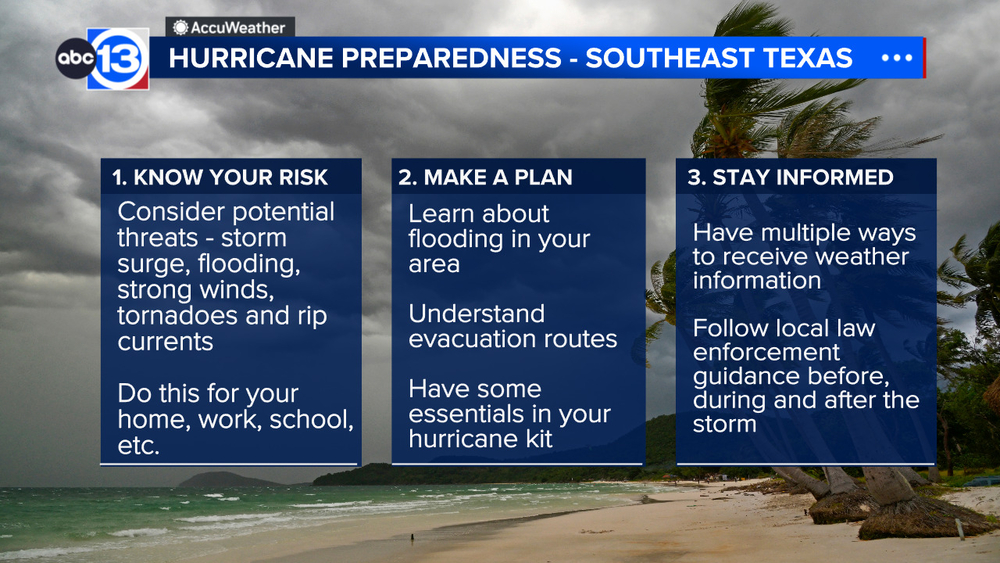
NOAA is forecasting a 55% chance of having a below average storm total this year due an El Nino pattern which typically brings higher wind shear and fewer storms in the Caribbean and Gulf, but that doesn't mean we are in the clear. In fact there are many cases of "below average" storm total years bringing devastating hurricanes to the United States. It only takes one, so as always, prepare for the worst and hope for the best. Now is a great time to make sure you have any hurricane preps and plans in order. It's never fun to think about hurricane season, but it's much easier to do now than it is when a storm is threatening.
May 26
The 2026 Atlantic Hurricane Season Outlook is here, and it hints at a potentially below-average season in terms of activity.
NOAA forecasters are predicting between eight to 14 named storms, three to six hurricanes, and one to three major hurricanes for the 2026 season. Each of these estimates is either at or slightly below the norm for each category.
So where do these numbers come from, and what could it mean for Texans? ABC13 Meteorologist Elyse Smith has more analysis and information on what this could mean for Houston.
The overarching reason for the strong signal pointing to a less active Atlantic hurricane season is the emerging El Niño in the Pacific. At the end of May, water temperatures in the equatorial Pacific Ocean are trending warmer than normal and could continue to warm into the summer months. This would signal that an El Niño has formed, and some long-range computer model guidance suggests this emerging El Niño could strengthen quickly and become a strong El Niño by later this year.
The importance of this phenomenon arriving at this time of year is that it can impact the jet stream over the United States, the Gulf, and the Caribbean. Typically, hurricane seasons with El Niño conditions have favored below-normal activity in the tropics due to wind shear. This is especially true for the Gulf and Caribbean. Wind shear can be a limiting factor in the formation and intensity of tropical storms.
So that's part of the equation. The other is to use historical references and comparisons with previous Atlantic hurricane seasons when similar conditions may have been present. These are called analog years. The analog years used to make the 2026 hurricane season prediction are 1997, 2006, 2009, 2015, and 2023. Each of these years had at least a moderate to strong El Niño during hurricane season, comparable to what could happen this year.
Of the five years, four had below-normal activity in the Atlantic during hurricane season, with some seasons even recording record-low activity. For example, 2006 was previously one of the least active seasons since the 1997 hurricane season. And 2015 was the third of three consecutive years with below-normal activity, too.
But the 2015 season should ring a bell to Houstonians, as that was also the season that brought Tropical Storm Bill to the region. Bill formed from a tropical wave that made it off the west coast of Africa and entered the Gulf. A passing trough then allowed for the system to organize, and in a little over a day, Bill made landfall along Matagorda Island on June 17, 2015, as a tropical storm. Bill brought a 3- to 4-foot storm surge to coastal areas, and its bands of heavy rain led to flash flooding across Southeast Texas. And yes, that was both during an El Niño year and what would end up being a "blow-normal" hurricane season.
The exception is the 2023 season, which is the fourth-most active on record in the Atlantic. The difference here, though, was that the El Niño was paired with record warm water that was already emerging in the deep tropics across the Atlantic. At this time, the waters in the deep tropics aren't warming as quickly as they were in 2023.