13 Investigates: SNAP errors could cost Texas taxpayers up to $773M

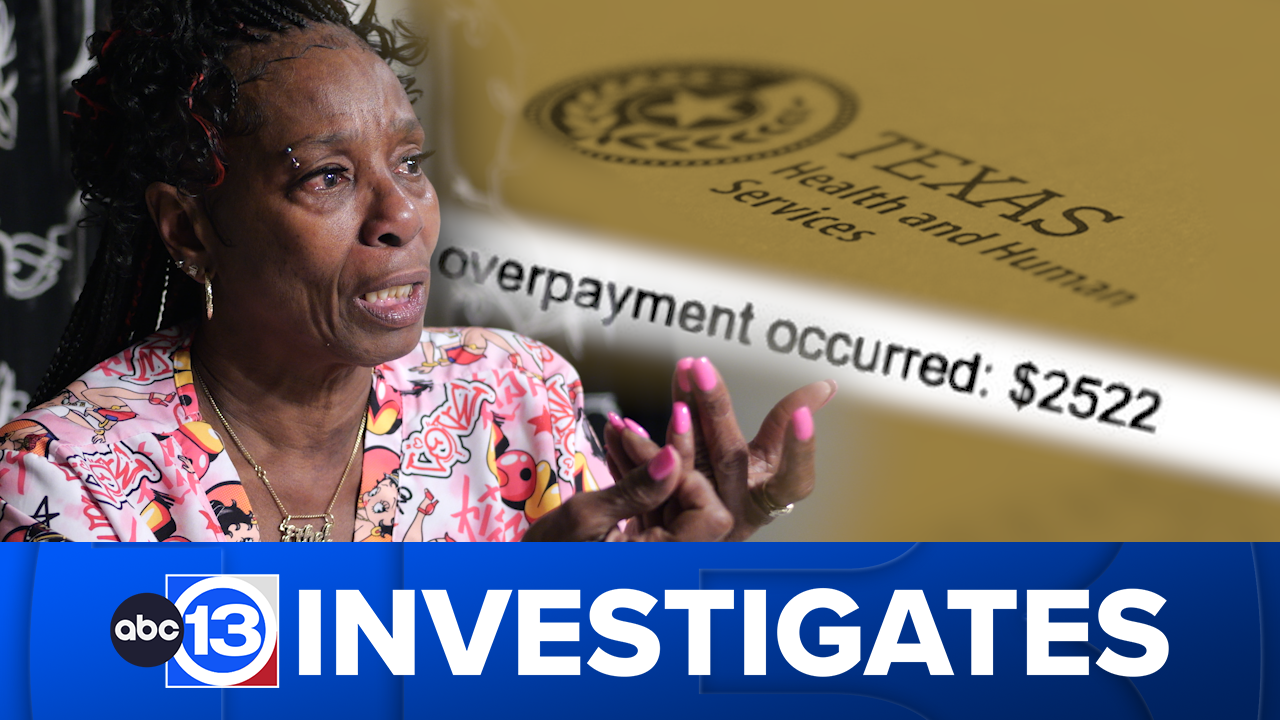
HOUSTON, Texas (KTRK) -- Ethel Griffin said she works three jobs to support herself and her 13-year-old godson, whom she recently took in.
She thought the state was helping carry the load of raising a teenager after she applied for and received SNAP benefits. Instead, the Texas Health and Human Services Commission now says she owes them $2,522 for their own mistake in overpaying her.
"I cried," Griffin said. "I can't pay this here back and still pay my bills too."
Griffin's situation is similar to Jerralee King's. Last month, 13 Investigates reported that King owes the state nearly $9,000 in SNAP benefits because the state approved her application due to its own error.
RELATED: 84-year-old seeking job to repay $8K in SNAP benefits as state admits error
RELATED: Anonymous donor pays $8k debt for senior after 13 Investigates reported state's SNAP error
In a letter to Griffin, the state said she was paid more than $2,500 over a six-month period, when she should have only received $128 during that time.
Both King and Griffin received a "Notice of SNAP Overpayment Claim" from the state.
In the first paragraph, the Texas Health and Human Services Commission openly admits there was an "agency error."
King and Griffin's cases are part of a larger issue the state is working to address before it costs Texas taxpayers.
Under a recent federal law, the One Big Beautiful Bill Act, states have until 2027 to bring their SNAP error rate below 6%. This includes when someone is overpaid or underpaid for benefits.
In fiscal year 2024, the most recent data available, Texas had an 8.32 percent error rate, according to the U.S. Department of Agriculture.
Texas' error rate is better than the national average of 10.93 percent, but it's still over the limit.
If Texas doesn't hit the six percent mark, the state, not the federal government, will have to cover between five and 15 percent of SNAP costs with its own funds.
At its current error rate, Texas would be on the hook for up to $773 million, according to our 13 Investigates analysis.
On a mobile device? Click here.
The Texas Health and Human Services Commission said it's working to lower the state's error rate.
The numbers for fiscal year 2025 aren't out yet to see if progress has been made, but Texas HHSC said the USDA is expected to release those error rates this summer.
Griffin said she's picking up extra weekend shifts now to make ends meet and provide for her godson.
"He's a kid. He wants to run track. He plays football and basketball. They need a lot of stuff - just, he needs a lot of stuff that I can't give him," Griffin said. "Say somebody was working a job, like paying $20 an hour. My three jobs add up to that."
Griffin said when she applied in person for SNAP benefits in December 2024, she brought all the required documentation.
Six months later, she said a different caseworker told her the first employee didn't process some of her income, which caused the error.
Griffin said if the state just stopped her SNAP benefits, she could have adjusted. Now, she said, owing them money makes it harder.
"Everything is backfiring on me now. It's not right," Griffin said.
13 Investigates found Texas HHSC identified 1,468 agency errors between January 2025 and January 2026, when we requested the data. That means 1,468 times the state acknowledged it made the mistake.
During the same 13-month period, there were 2,029 SNAP errors resulting from fraud and 10,139 cases due to "unintentional client error," according to data from the Texas Health and Human Services Office of Inspector General.
While fraud and unintentional client errors combined are about eight times more common, those who fall into the agency error category are fighting back the most by appealing the rulings. But data shows they have the lowest success rate of getting anything changed in their favor.
Griffin appealed, but nothing changed with her case. Her repayment plan requires her to pay $66.50 per month for the next 3 years. She said she hasn't been able to make her payment every month.
"I'm looking back here, and I know I need to pay these people, and I know I need to do this, and I know I need to do this here, so what should I do first?" Griffin said.
The Texas HHSC previously told 13 Investigates in a statement that it is working to improve its SNAP payment accuracy.
"HHSC has implemented targeted case reviews, enhanced staff training, technology-based quality checks, and clearer policy guidance to reduce errors and ensure families receive the correct benefit amount. These efforts help prevent mistakes before benefits are issued," the state agency said in a statement last month.
After ABC13 previewed this story on air, a viewer reached out and has paid Griffin's debt.
Contact 13 Investigates
Have a tip? A problem to solve? Send a tip below. If you don't have a photo or document to include, just hit 'skip upload' and send the details. (On mobile? You can open our form by tapping here.)