How climate change is impacting when mosquitos can impact Houstonians


HOUSTON, Texas (KTRK) -- With fall just around the corner, many Houstonians are looking forward to cooler days and what that can mean for some of those pesky summer pests. Specifically, mosquitoes.
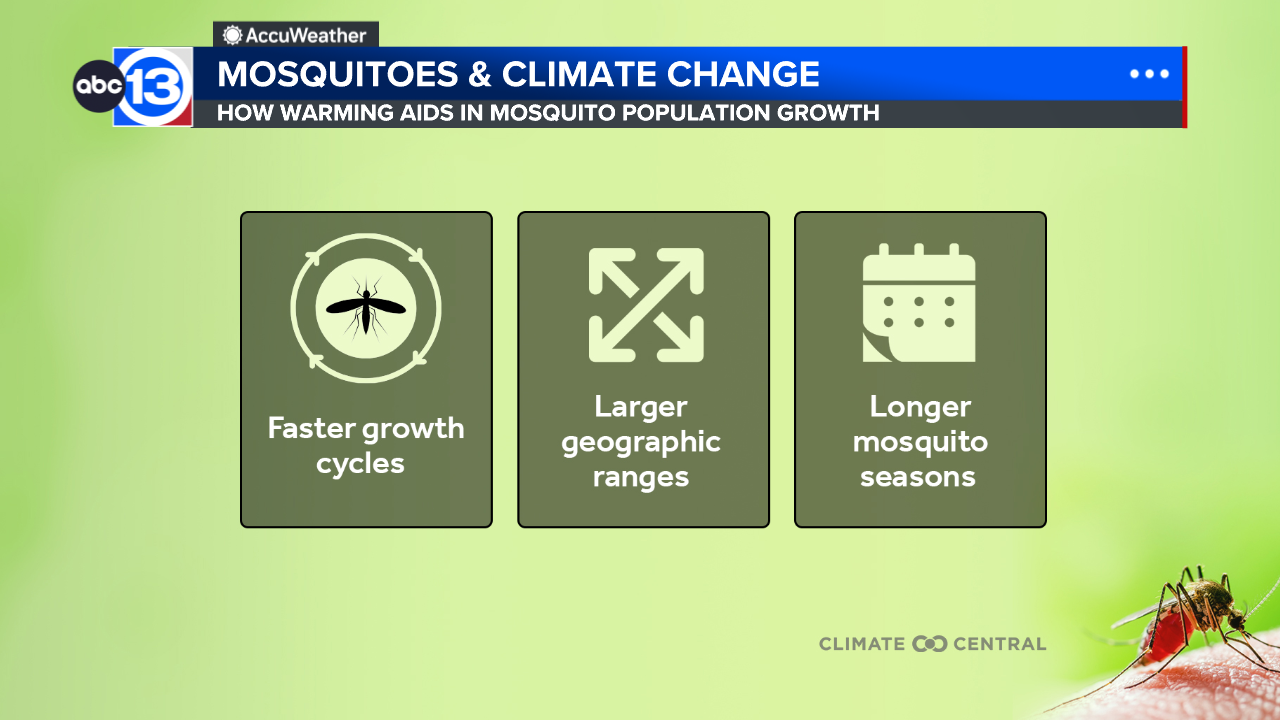
And while the Gulf Coast is no stranger to these little guys, a new study from Climate Central found that much of the United States is witnessing a seasonal mosquito boom related to climate change.
The study investigated how climate change is increasing the number of days on which mosquitoes can be active and transmit diseases. For much of the U.S., those days have increased significantly over the last five decades as the climate warms.
They analyzed over 200 cities across the country over 50 years. On average, the number of mosquito days increased by 18 days. But some cities saw an increase by nearly a month. That's 28 more days in a calendar year when weather conditions could support mosquitoes, and the regions that experienced the biggest change overall were the northeast and southeast.
Houston also saw a slight increase in mosquito days of about two weeks in this study. But living along the Gulf Coast already exposes Houstonians to a mosquito-heavy climate thanks to how much it rains.
ABC13 Meteorologist Elyse Smith reached out to a local plant and soil scientist to learn more about what we can do and when to help prevent mosquitoes. Karrie Calloway says that now, heading into fall, is the best time to prepare your home to help prevent mosquitoes in the weeks and months ahead.
"A lot of people think that as long as it's not standing water, it's okay. But the eggs can still be laid. And once the water hits it, for instance, let's say rain hits a pot, as soon as the water hits (the egg), it activates that mosquito," Calloway said.
Think of it like preventative maintenance. So in the fall, or before any major rain is in the forecast, Calloway recommends cleaning your gutters, fixing any drainage issues, and wiping down pots and bird baths to get them free of standing water.
So while the summer is traditionally when mosquitoes are the most active, experts told ABC13 that the mosquito season in Southeast Texas can now last well into the winter if conditions are right.
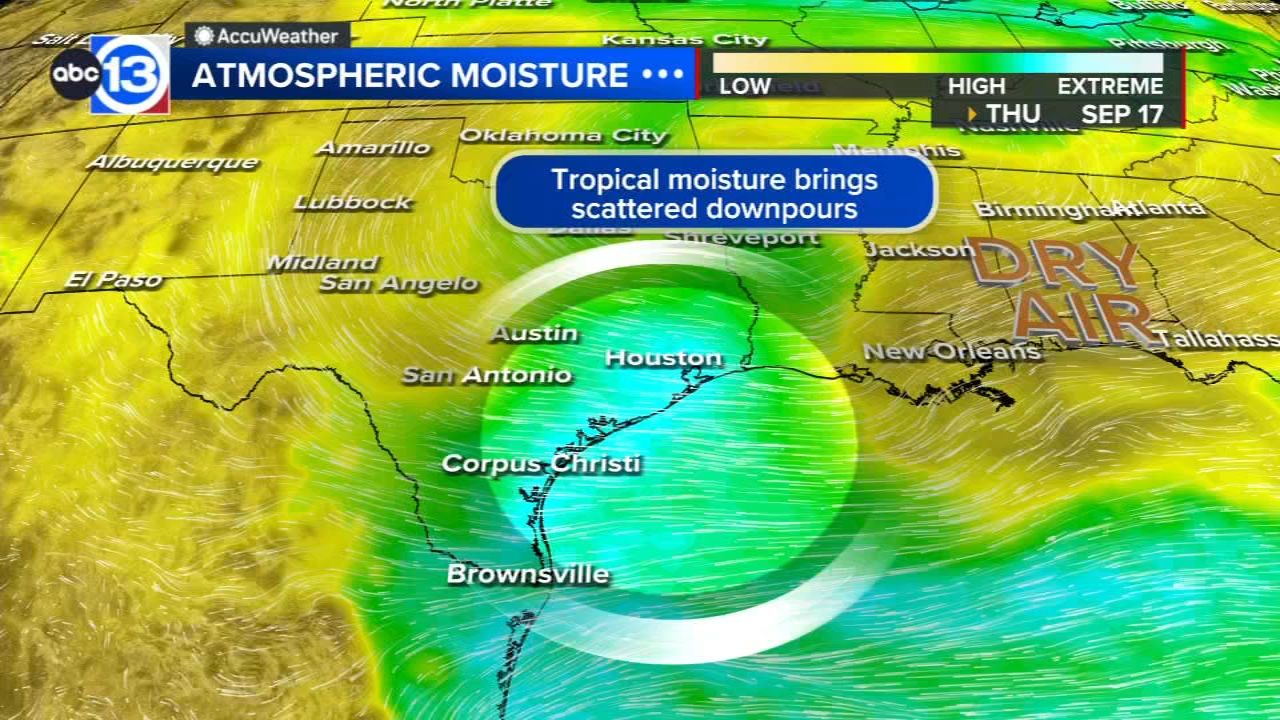
The upcoming winter months could be wetter than normal for Texas thanks to the strong El Niño in the equatorial Pacific Ocean.
Calloway told ABC13 that it's more so the humidity and rainfall that lead to a local mosquito boom than temperatures alone.