Only on 13: How weather impacts Houston Ship Channel operations


HOUSTON, Texas (KTRK) -- It's no secret that Houston and Southeast Texas are known for crazy weather. Severe thunderstorms can bring flooding rains and hurricane-force winds, and of course, then there are hurricanes themselves. Harris County is vulnerable, especially to billion-dollar disasters, and it also happens to be home to several industries that are extremely weather dependent.
The Port of Houston is the largest container port along the Gulf Coast. Every year, barges sail up and down the Houston Ship Channel, accounting for over a trillion dollars in economic value. Break that down to a day, and that's about $3 billion. Only on 13, meteorologist Elyse Smith got a closer look at the trillion-dollar industry that fuels our local economy and how the weather impacts the big business of the Houston Ship Channel.
Alberto Hernandez, director of the Vessel Traffic Service, has kept a watchful eye on the Houston Ship Channel and surrounding waterways for over 20 years. His team and the U.S. Coast Guard conduct a 24/7 operation to keep mariners safe and the money flowing. He told ABC13 that the biggest culprit when it comes to weather impacting their operations is not necessarily that of the extreme variety.
SEE ALSO: New storm surge defense plan aims to protect Greater Houston area from catastrophic hurricanes
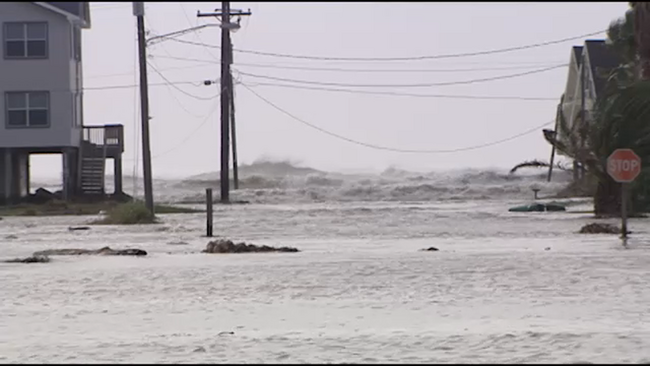
"Fog is generally the year's greatest impact to the channel," Hernandez said. "In February, we had a week-long event that we had fog every day on the channel, and we were losing 12, 18 hours of traffic opportunity."
In fact, at its worst, fog can shut down the ship channel for upwards of 600 hours a year. For comparison, during a storm like Beryl, the channel was only closed for about 36 hours. So that's why fog, and more fog cameras, could be in the ship channel's future when it comes to mitigating economic loss due to the weather.
Another reason why the weather can have such a big impact on business is because of the physical makeup of the ship channel. Galveston Bay and Trinity Bay are only about 10 feet deep. That means the majority of those waterways can't accommodate larger ships. The exception is the manmade ship channel, a narrow line that's only 46 feet deep and 700 feet wide. This means there's only one way in and one way out for traffic, which is why knowing the weather forecast is critical.
Earlier in 2025, the National Weather Service office in Houston was part of a pilot program that would allow for meteorologists to be on-site at the Vessel Traffic Center to help the Coast Guard on high-impact days. Hernandez told ABC13 that he hopes this initiative will continue, despite recent staffing cuts to the agency.
For more on this story, follow Elyse Smith on Facebook, Twitter and Instagram.