Artemis II mission approaches midpoint, astronauts prepare for lunar flyby Monday
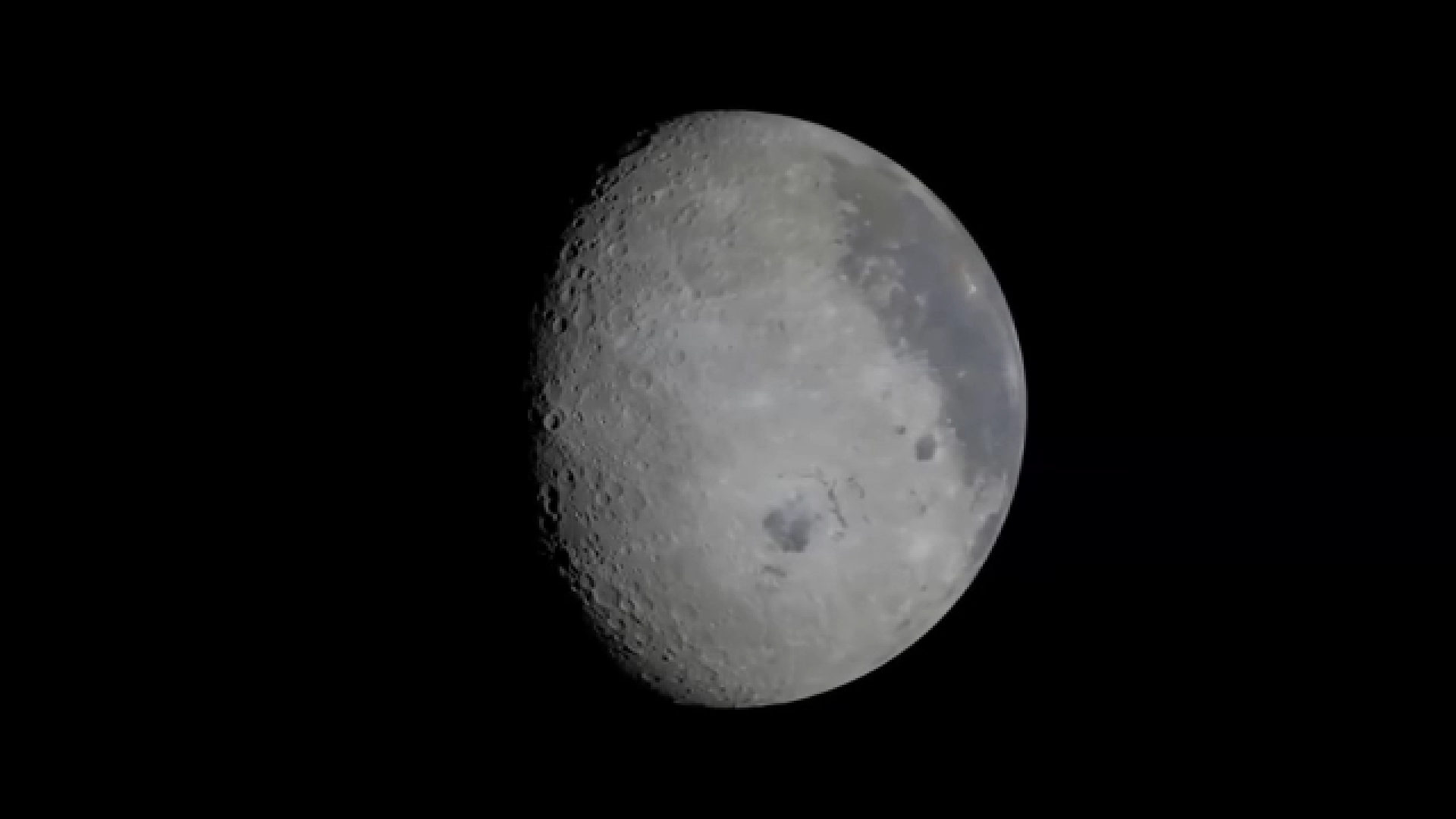

CAPE CANAVERAL, Fla. (KTRK) -- The Artemis II mission is continuing to progress smoothly as astronauts prepare for a key milestone: a flyby of the moon that will take them farther from Earth than any humans in history.
Officials with NASA said during a mission update Sunday that the 10-day journey is going "incredibly well" as the crew approaches the midpoint of their journey aboard the Orion spacecraft.
The four astronauts are scheduled to begin a roughly seven-hour lunar flyby Monday afternoon. During that time, they will travel to the far side of the moon, surpassing the distance record set during Apollo 13, which reached 248,655 miles from Earth in 1970.
"This is an incredible accomplishment," commander Reid Wiseman said in a recorded statement. "To see the Earth and the moon at the same time - to be between those two celestial bodies - it's something very special."
Mission managers say the flight has remained stable, with the crew also practicing contingency procedures, including how to handle extended time in pressure suits.
"We used this time to practice a few contingency scenarios," Rick Henfling, Artemis II flight entry director, said, noting simulations included drinking and administering medicine while suited.
Overnight, the spacecraft is expected to enter the moon's "sphere of influence," the point at which lunar gravity becomes stronger than Earth's pull.
"That's when the moon's gravity has a stronger pull over the spacecraft than Earth's gravity," Henfling said.
Top Stories



According to NASA, the lunar observation period is scheduled to begin at 1:45 p.m. CDT Monday. Communications with the crew will temporarily be lost as Orion passes behind the moon before astronauts make their closest approach. Contact is expected to resume shortly afterward.
Experts say the mission's success so far has exceeded expectations.
"I don't think NASA could have anticipated how well everything has gone," said Don Platt of the Florida Institute of Technology. "Up until now, it's hard to imagine it going any better."
Platt said the mission could inspire a new generation of explorers, similar to the impact of the Apollo era.
After completing the lunar flyby, the crew will begin its return trip to Earth, with splashdown expected Friday.