The unfolding crisis brought back haunting memories of last summer's unimaginable Hill Country floods that killed more than 100 people over the July Fourth holiday.
"It's crazy happening two times in one year," said Josiah Rodriguez, who woke to the sound of heavy rain around 2 a.m. Thursday in Kerrville. He navigated flooded roads to help evacuate relatives.
"Last year there was no warning of it," he said. "It just kind of happened overnight, and it took everyone by surprise. This year, a lot more alerts have been put in place, a lot more safety measures."
Residents said they were caught off guard a year ago and didn't receive any warning when the Guadalupe River overtopped its banks. Some local leaders were criticized for not acting quickly.
The storms and flooding this time threatened multiple counties close to the Mexico border and in the Hill Country near San Antonio. As of late Wednesday, six million residents across Texas were under a flood watch, and some were expected to remain in effect through Friday evening.
Several agencies sent rescue helicopters to the flood zone, including Travis County, home to the state capital of Austin.
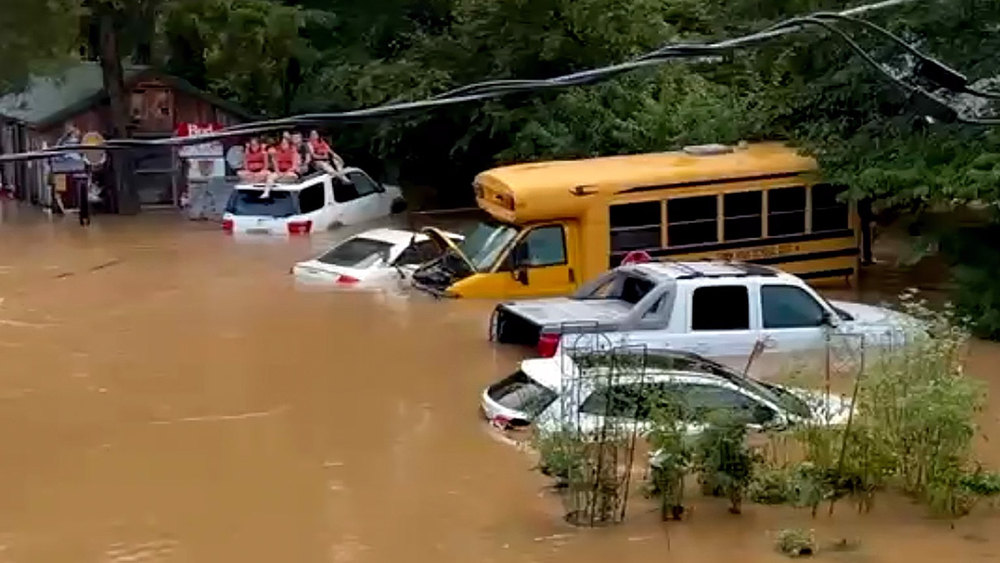
"My understanding is people were mostly trapped in trees and on rooftops," said Travis County Judge Andy Brown, who said one caller warned 10 people were trapped on a barn roof.
Residents rush animals and campers to higher ground
At a wild animal rescue, Katie Buck evacuated several dozen animals to higher ground in the dark early Thursday as the normally dry Lazy Creek overflowed. She had to quickly grab a porcupine despite having no gloves.
She was able to get all of the animals to safety, but flooding destroyed several enclosures at the Buck Wild Animal Rescue and Wildlife Rehab near Ingram, which also was hit hard 12 months ago.
"We were just starting to get back on our feet again," Buck said. "To have to go through this again is just devastating."
Residents at an RV park in Comfort moved their trailers as sirens sounded, said manager Duke Earwood.
Water rose over the hoods of vehicles parked near the river at the Comfort RV Resort, which has about 200 residents. Markers showed the flooding already matched last July's big flood.
"Too familiar for sure, and too soon," Earwood said.
Uvalde residents isolated by floodwaters
Floodwaters overran the city of Uvalde overnight, cutting off outside access. The Leona River, normally dry most of the year, filled streets with water.
"People really can't get anywhere" said Carmen Rodriguez, who nervously watched water engulf her neighborhood Thursday morning as a helicopter roared overhead. "We have a place to go, but all the streets are closed."
Phones buzzed with warnings all night warning of flash floods in the morning. Rodriguez said authorities seemed to be well prepared, ordering mandatory evacuations and notifying people directly.
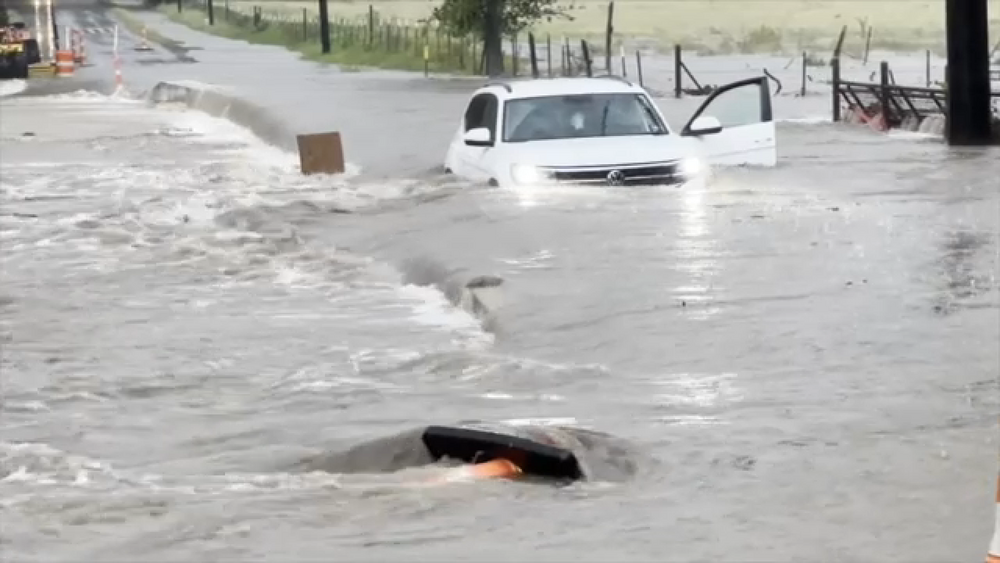
Uvalde officials found people trapped in vehicles overnight, said Juli Alvarado, a spokesperson for the police.
Texas Game Wardens rescued more than 40 people, mostly in the Uvalde County area, according to a Texas Parks and Wildlife Department spokesperson.
Flooding could reach last year's deadly high
While heavily swollen from rainfall, so far the Guadalupe largely remained below the record levels reached during last year's deadly floods.
Gauges showed it rose by more than 30 feet (9 meters) in some spots in just hours overnight. One near Kerrville showed the river rose 32 feet (9.7 meters) in four hours.
Close to Camp Mystic, which remains shut, the Guadalupe River near Hunt reached about 20.5 feet (6.3 meters), which is enough to cause flooding, but still far below record levels set last year's, according to U.S. Geological Survey and National Water Prediction Service data.
In Kerr County, where summer camps dot the shores of the Guadalupe, the sheriff's office said all campers were safe. Several camps said their campers were staying inside, with one camp reporting normal flooding.
Associated Press writers Christopher L. Keller in Albuquerque, New Mexico; Dave Collins in Hartford, Connecticut; Michael Phillis in Washington; Claudia Lauer in Philadelphia; Kathy McCormack in Concord, New Hampshire; and John Seewer in Toledo, Ohio, contributed.