How Texas Southern University and University of Houston students played pivotal role in Civil Rights
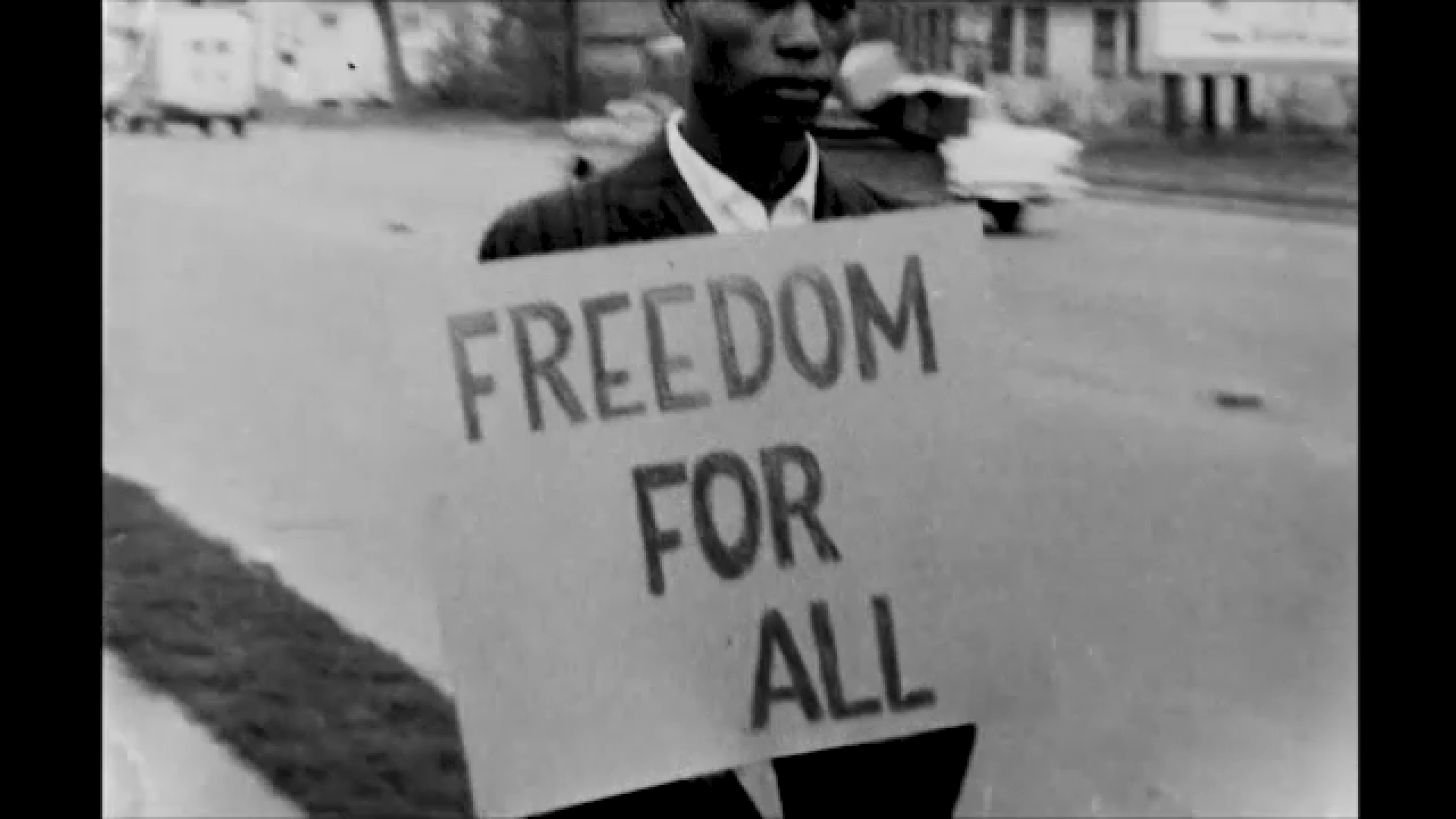

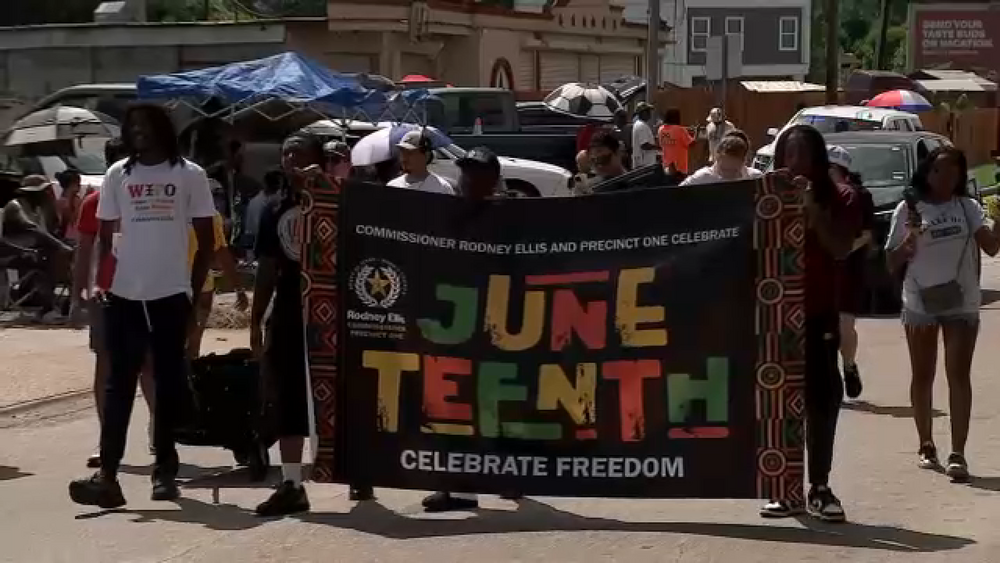
HOUSTON, Texas (KTRK) -- As people gather for Juneteenth celebrations to mark the day when enslaved people in Galveston, Texas, learned they had been freed - two years after the Emancipation Proclamation - another turning point in American history is being remembered: How students at Texas Southern University and the University of Houston played a pivotal role in the Civil Rights movement.
Before she retired, former ABC13 anchor Melanie Lawson talked to some of the former students who laid the groundwork for the community and academic programs we know today.
And for the first time as a group, Deloyd Parker, Gene Locke, Omowale Luthuli Allen, and Kenneth Hoyt shared their experiences transforming education, and ultimately, the city of Houston.
Watch the extended version of this story by hitting play below.
"You have to understand this is America in the 1960s. We're in the height of the Civil Rights movement," Locke tells Melanie.
The meeting place for this conversation is fitting. The four men are inside S.H.A.P.E. Community Center, co-founded by Parker.
There's another connection.
While TSU and UH are just minutes away from each other in Third Ward, the co-existence between the schools runs deeper than that.
The Houston ISD Board created two colleges in 1927 based on race and laws of the time - Houston Junior College, which became the University of Houston in 1934, and the "Separate but equal" Houston Colored Junior College, which evolved into Texas Southern University in 1951.
Additionally, the first African American student at UH, Dr. Charles P. Rhinehart, had ties to TSU, too. In fact, he was a renowned pianist and professor at TSU.
Rhinehart earned his doctorate at UH after entering the school in June 1962.
Two years earlier, TSU students were making a statement.
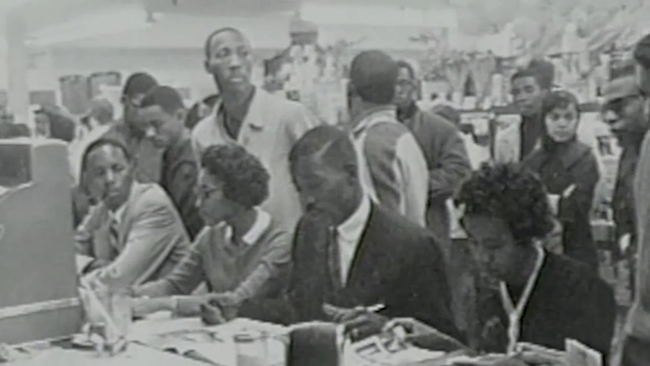
On March 4, 1960, they created their own momentum in the Civil Rights movement, organizing the first sit-in at Weingarten's grocery store on Almeda Road to protest segregation in Houston.
The students quickly learned they weren't alone in the fight for their rights.
The late Rev. Bill Lawson, and father of Melanie Lawson, was the chaplain for the Baptist Student Union at TSU. He initially told them not to protest out of fear they'd be jailed.
"They said, 'Well, 'If you don't want to give us advice on it, we'll go find somebody else who will advise us. We're gonna march!'" the reverend told ABC13 in 2004.
Lawson soon founded Wheeler Avenue Baptist Church and, as a Civil Rights icon in the making, he guided youth pushing for equality, including some of the first Black students at the University of Houston.
"And so there we stood, and there were all kinds of misconceptions about who we were and what we could do," said Locke, the former Harris County Pct. 1 Commissioner, city attorney, and mayoral candidate. "The racism ranged from low expectations on the part of the teachers for the performance of Black students to isolation of Black students from all of the social activities that were going on."
SEE ALSO: 2 women involved in Houston's first sit-in demonstration speak with ABC13 to commemorate 62 years
Locke helped to racially integrate UH in 1965. Parker and Allen, a Civil Rights activist, were among those early Black students at UH as well.
The group organized the Committee for Better Race Relations, which later became Afro Americans for Black Liberation or AABL (ABLE). Together, they formed a community with reach both inside and outside of the school.
"We got involved in a lot of things away from the University of Houston. Issues of police brutality, we had demonstrations," Locke recalled. "We had pickets when we felt that Black entrepreneurs would not get the opportunity to buy franchises."
At TSU, students like Hoyt, a federal judge, faced their own challenges.
"It was just another aspect of how racism and bigotry plays a role against Black institutions," Hoyt said. "Just wasn't funded sufficiently to provide good food services to the students, for example. So it was different, but the same."
"We quickly also realized that we had to be part of uniting students at Texas Southern who were active in a lot of things and with community leaders," Locke added.
In 1967, TSU students demonstrated not only against inadequate conditions and lack of course offerings at the school compared to their white counterpart, but also over the dismissal of professor and Student Nonviolent Coordinating Committee advisor Mack Jones.
Things escalated when 11-year-old Victor George drowned in a trash-filled pond at a dump that the community had wanted closed in the Sunnyside neighborhood.
During demonstrations against the dump on May 17 of that year, Rev. Lawson and Locke were arrested.
"I was very comfortable in jail for a short moment until I realized that Rev. Lawson was gone. They had come to get him so that he could go to TSU to quell the demonstration and the riot that the police had caused at Texas Southern," Locke said.
That demonstration was described by media at the time as the TSU Riot.
"Around midnight or just before, the police and sheriff's departments invaded the campus," Hoyt began. "They fired literally thousands of rounds into, attempted to fire them into, against the dormitories and in through the windows of the dormitories. A policeman was killed by ricocheting bullets."
"We were forced to lay on the ground outside of Lanier Hall, and some of the pictures show some of the boys being put down near the student center on the concrete. But I was on the dirt and grass in front of Lanier hall, and I landed, believe it or not, in an ant bed," Hoyt continued.
In the end, only one weapon was found inside the dorms - a small caliber pistol.
Hundreds were arrested, including the TSU 5, students who faced charges following the death of Officer Louis Kuba. Their charges were dismissed three years later due to insufficient evidence.
In addition, Rev. Lawson urged Houston Mayor Louie Welch not to put the incident on protesting students' records after he said the mayor admitted he'd made a mistake.
"We were more than just campus, more than just community, but national and international," Parker said of their impact.
"We had our hands in all of those movements," Allen added. "So yes, I feel like we were part of very, very sweeping change that was transforming the country."
1967 was also the year UH students got strategic.
"We came come up with this idea that, rather than let the fraternities and sororities pick the homecoming queen, we're going to unite everybody else in a political move," Locke said. "And if we can do that around electing a homecoming queen, then we can do it around political issues that can change the campus. And so we ran Lynn as the homecoming queen."
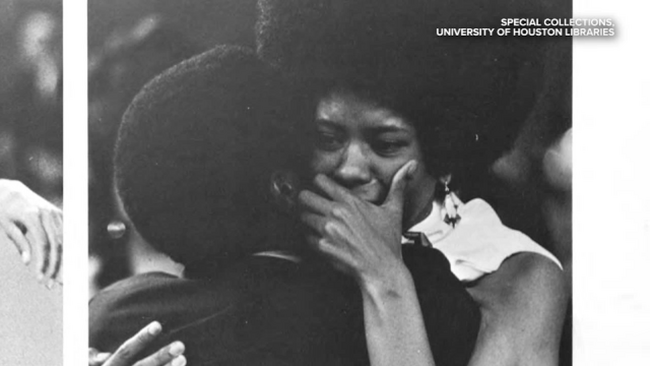
Lynn Eusan made history in November 1968 as UH's first African American homecoming queen and the first at a predominately white university in the South.
"She measured up, eclipsed any expectations that we had in terms of the elegance and the dignity that she represented. The University of Houston and every university in the deep South should have been proud of the fact that she broke the color barrier," Allen said.
Eusan started tutorial programs for young Black students in the Third Ward area and co-founded S.H.A.P.E. with Parker.
But just as the UH graduate and journalist's star was rising, tragedy struck. A month before her 24th birthday, Eusan was murdered.
Locke says she was waiting at the bus stop in the rain, when she accepted a ride to work from a stranger. That man, identified as Leo Jackson Jr. was accused of killing Eusan, but acquitted in 1972. Her murder remains unsolved.
"I will say that that was a void, a big void, because of who she was and her personality and her skill set," Locke said.
Through AABL, Eusan, Locke, Allen, and Parker placed 10 demands before UH leadership, paving the way for the African-American Studies program, among others, that still exists today.
"I know that all of us came to the universities, whether it's the University of Houston or Texas Southern University, with the idea that we needed to make some changes happen and that we're going to be a part of that change," Hoyt said.
"As a result of that, not only were Black people experiencing some level of new freedom," Locke said. "But women benefited, other minority groups benefited, and the country benefited from it."