Powerful psychedelic drug ibogaine gets closer to FDA approval: Stories from Texans who have done it


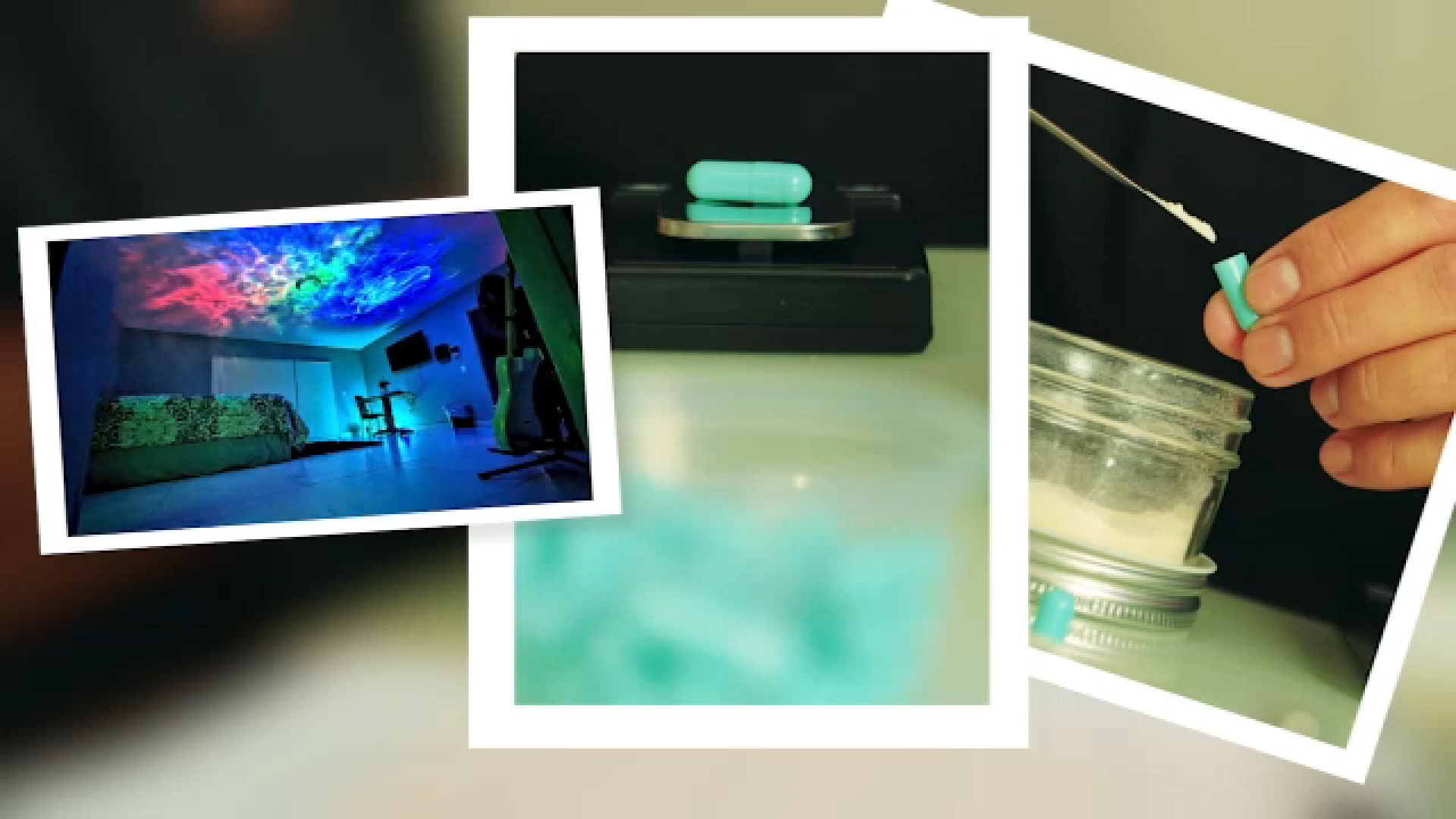
Texas patients are traveling across the border to get their hands on a strong, unregulated psychedelic drug that they say is bringing renewed hope for mental health treatment.
The drug is called ibogaine, and it could be getting closer to receiving FDA approval.
President Donald Trump recently signed an executive order to speed up and fund research and access for the drug to treat serious mental health illnesses like PTSD, addiction, and anxiety.
ABC13 met the Hutto family in New Waverly.
"It's very heavy. What I've been carrying," Houston Hutto said.
Life changed for Hutto and his family on Aug. 12, 2021.
"We had been doing it all summer. They were playing on a trailer that was full of water, and I shouldn't have had him doing that in the first place. Your job as a parent, I feel like, is to provide and protect your children, and I didn't do that," he said. "He accidentally fell off the trailer, and I ran over the top of him. It was a traumatic brain injury."
His son, Holden, has been through eight surgeries since then.
For Charles Graham Jr., the trauma started 8000 miles away from home and never left.
"You go to war, and then it's over, and you go back to society, and you have to be a regular human again," he said.
For Graham Jr. and Hutto, the pain was unbearable. The relief, impossible.
Then, they heard of a drug called ibogaine, extracted from the iboga plant in central Africa.
It's a psychedelic, meaning it changes your perception of reality, usually through strong hallucinations.
Here in the United States, ibogaine is illegal.
But, in Mexico, ibogaine is unregulated.
It just takes basic googling to find medical clinics catering to Texans.
"I don't talk people into it; in fact, I usually talk people out of it," said Aeden Smith-Ahern, the owner of Experience Ibogaine Treatment Center in Tijuana, just past the San Diego border.
Smith-Ahern is a former heroin addict who took the psychedelic in 2012.
He said the drug helped him handle opioid cravings and withdrawals.
"There's nothing fun about it, and that's exactly how it should be," he said. "It's not something you should want to come back and do again."
Ibogaine at most Mexican clinics will cost you between $5,000 and $15,000, if you include transportation and lodging costs.
Top Stories

Hallucinations, ABC13 was told, can last up from 12 to 36 hours.
You're hooked up to a heart monitor because the drug can cause abnormal heart rhythms.
You'll be dizzy, you'll probably throw up, and everybody we talked to saw and felt demons.
"Snap, then woah. It's the only way to describe it," Graham Jr. said. "Oh, my god. It's literally...my eyes rolled back. My mouth opened as far as it would stretch. It was just like, 'Woah.'"
"I did see one time, in huge letters, they were orange and purple, it just said 'failure.' I'm just sitting there staring at it. Below it was a picture of all these people I had let down or failed my whole life," Hutto described.
"It would just fill up and then pop pop pop," Graham Jr said. "It was everywhere. It was so hard to see. It made me throw up."
The changes, both Hutto and Graham Jr. said, started immediately after the treatment.
Researchers said the drug interacts with neurotransmitters to form new brain pathways, and, while there are still questions on exactly how it works, it can change the way users act and feel.
After extensive lobbying by veterans' groups and former governor Rick Perry, the state of Texas has allocated $50 million to research the drug.
In April, President Donald Trump signed an executive order to fast-track the drug's approval, with none other than the popular podcaster Joe Rogan standing behind him.
"If you go back to when these drugs were criminalized, they were associated with the hippie movement and counterculture and got this left-wing tag, so to speak, but that's really changed," explained Dr. Katharine Harris.
Harris is a drug policy fellow at Rice University's Baker Institute.
"I think, on one hand, it's very encouraging to see the state investing in this kind of thing, but it's also important to ask what we are not investing in," she said. "If you want to focus on something like substance use disorder, which we know afflicts millions of Texans, the state has not historically funded treatment to the same level as other states. It's worth asking what else could this money be spent on."
She said it is only being studied for medical purposes.
"It is not for the faint of heart, and I think in some ways there might be so much emphasis on it in a state like Texas because it's not fun," she said. "It's not really used in recreational settings, which I think gives an air of, 'this isn't a plaything, this is for real.'"
"Everybody is full of so much trauma that their brain is distorted to where they can't find peace," Graham Jr. said. "They don't know where to even start. This, I can't even call it a start. It's a cheat code to reach the finish line."
"I did have one of the most vivid, clear thoughts I'd ever had, and it was, it said, 'you're not your past failures and mistakes, and the burden you're carrying is not meant for you to carry,'" Hutto said.
For these two, who took the drug months ago, it's too soon to know how long this peace will last.
But they said it brought a reset: a new perspective coming from within their own brains.
"It helped me be more positive, more grateful that he's not having seizures and I'm not pushing him in a wheelchair. I could very easily be going to visit his gravesite. He's here, and at the end of the day I get to hug his neck and tell him that I love him," Hutto said. "It's still something I think about and probably always will. But having my perspective shift into more of a positive and grateful one has been very freeing.