A snowpack in Russia's Siberia is a phenomenon that influences the U.S.'s winter weather. Here's how


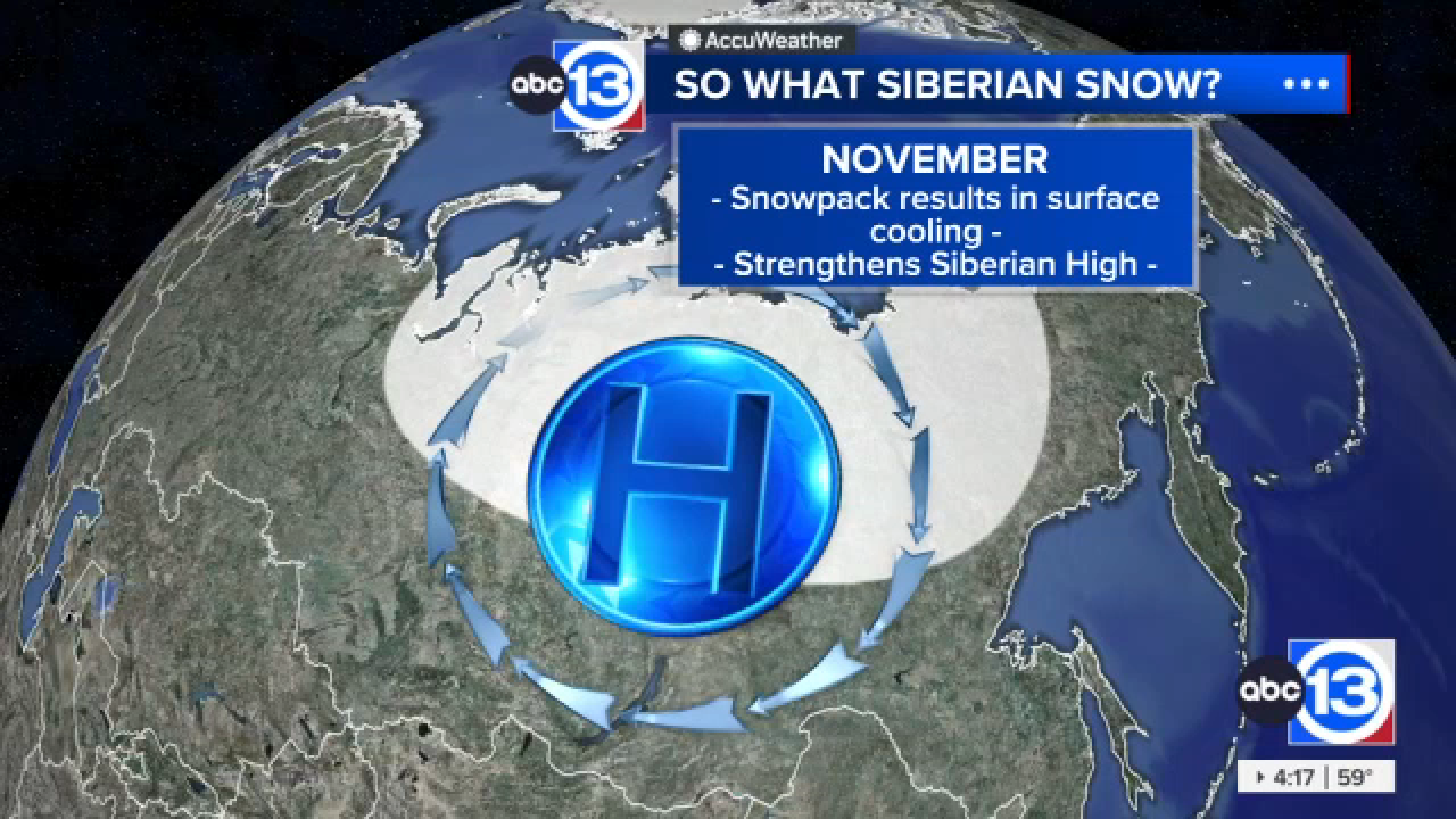
This past October, a vast snowpack formed across Siberia after several snow events occurred in northern Asia. As it turns out, this phenomenon across the globe can influence winter weather patterns in the United States. Here's how.
A large area of snow, the kind that can form and last in a cold climate like Siberia, can first impact local weather systems in the region. For Siberia, the snowpack that formed in October helped strengthen the Siberian High, mainly through consistent radiational cooling.
It's by December when this consistent pattern over northern Asia can begin to influence other weather patterns across the northern hemisphere, all the way up to the Arctic Circle. And what resides there in the winter? The polar vortex.
As a reminder, the polar vortex is a region of strong winds in the stratosphere, the layer above the troposphere where we live and where weather systems form. Typically, the polar vortex retains a symmetrical, circular shape as it spins around the Arctic Circle. It forms each winter because of the temperature difference due to the lack of sunlight this part of the world sees during the wintertime months.
From December through February, these resulting weather conditions and shape of the jet stream in the lower atmosphere, or troposphere, can begin to impact the region around the polar vortex.
Pair this with periods of "Sudden Stratospheric Warming," a signal that the polar vortex could break down, and the result is the vortex surging farther south across North America. These send cold air outbreaks and winter storms across North America at times throughout winter.

And we've already seen this trend manifest across the country within the past few weeks.
There was a brief cold air outbreak in early December across the High Plains and Great Lakes. Additionally, there have been several winter storms that have brought cities like Chicago over a foot of snow already, which is as much snow as they picked up for the entire winter season last year.
The "Siberian Snowpack" phenomenon isn't necessarily new either. Researchers within the past decade or so have closely analyzed this trend further, and its connection to winters across North America. It's also another great example of what we call teleconnection patterns, when one weather pattern elsewhere across the globe can influence our weather here in the US.
For more on this story, follow Elyse Smith on Facebook, X and Instagram.