Hours after statewide ban reinstated, smokeable hemp temporarily back on Texas shelves, court rules

Smokable hemp products, such as flower buds and rolled joints, are allowed back on shelves until the state's appeal of a statewide ban on the sale of the drug is heard in court next Thursday.
The state's 15th Court of Appeals granted a request by lawyers for the hemp industry to reinstate a temporary pause on the smokable hemp ban until the appeal hearing, currently scheduled for May 17.
Lawyers for the state filed an appeal on Tuesday against Travis County Judge Daniella DeSeta Lyttle's ruling last week, which extended the pause on the smokable hemp ban. The state's 15th Court of Appeals agreed to hear the appeal on Wednesday, putting the state's rules that effectively ban the sale of smokable hemp back into effect. Then, on Thursday, the appeals court granted the hemp industry a weeklong reprieve from the ban.
"We are very pleased that the Texas Court of Appeals did the right thing by reinstating the injunction," said David Sergi, an attorney for the hemp industry. "The veterans, elderly, and the approximately 30,000 employees in our industry thank the court, and we look forward to obtaining a permanent injunction and protecting these businesses by embracing the governor's vision as outlined in his veto message."
This week's decisions on smokable hemp are the latest in a string of dizzying court actions that have ping-ponged the status of the drug's sale in Texas.
The statewide ban on the sale of smokable hemp was supposed to go into effect on March 31. After lawyers for the hemp industry filed a lawsuit seeking to block the ban, a Travis County district judge on April 10 temporarily lifted it until May 1. Last week, Lyttle ruled to extend the ban until the next hearing in the district courts, scheduled for July 27, but because the 15th Court of Appeals agreed to consider the state's appeal, the ban was back in effect. That ban lasted only a few hours before the appeals court allowed the sale for another week.
The Texas Hemp Business Council, Hemp Industry & Farmers of America, and several Texas-based dispensaries and manufacturers have been fighting the state's new testing requirements that create a 0.3% total THC threshold that would effectively bar the sale of natural smokeable hemp products. The state also increased licensing fees for hemp retailers by 3,000%.
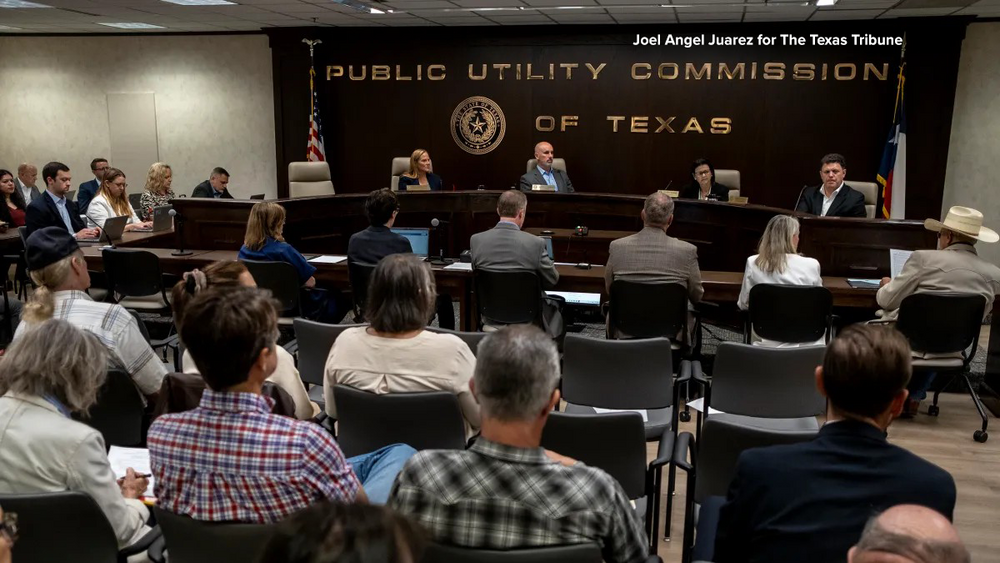
During the three-day hearing last week, lawyers for the hemp industry argued that the Texas Department of State Health Services overstepped its constitutional authority by rewriting the statutory definitions of hemp established by lawmakers in 2019.
"The Texas Legislature must answer to the voters of Texas; that is a fundamental check and balance of our constitution. Agency bureaucrats lack accountability to the people of Texas, which is why their authority is limited," said Jason Snell, one of the attorneys for the hemp businesses.
Attorneys for the state argued in court that Texas law requires the health agency to prioritize Texans' well-being in rulemaking, allowing them to implement new hemp regulations. The judge disagreed, saying the rules were doing irreparable harm to the industry.
"The Court finds that the purpose of a temporary injunction is to preserve the last, actual, peaceable, non-contested status that preceded the controversy," said Lyttle.
Andrew Alvarado, an attorney representing the hemp industry, said Lyttle's ruling upholds the separation of powers among government entities.

"Frankly, I think it's a win for all Texans, because fundamentally, the Court confirmed that unelected officials and state agencies cannot impose rules that conflict with the will of the people," he said.
In a separate decision that could harm the industry's chances of defeating the overall ban on smokable hemp products, the Texas Supreme Court on Friday upheld the state health agency's prohibition on another natural intoxicating hemp compound called delta-8 THC. Delta-8 THC has been off store shelves since 2022 because of the ban, allowing delta-9 THC to proliferate and become the most commonly found intoxicating chemical in hemp products now.
The court's decision says the delta-8 ban can remain in place because state law gives the agency broad authority to protect Texans. The state could invoke this ruling to allow the state health agency to ban any or all consumable hemp products, based on its statutory responsibilities to protect Texans, and that ban can only be undone if the Legislature tells the state agency that those products are legal.
"If the legislature desires to legalize powerful drugs, it has every tool it needs to do so-and to do so unmistakably, as we expect for such a major change to social policy. The role of the courts is merely to assess the state of the law as it is," Texas Supreme Court Justice Evan Young said in his court opinion.
State law defines hemp as containing less than 0.3% levels of intoxicating delta-9 THC. The health agency redefined hemp in accordance with federal law, which clarified last November that hemp can't contain total amounts of any type of THC - not just delta-9 THC - that is more than 0.3% of its dry weight, according to Zachary Berg, an attorney with the Texas Attorney General's Office. Berg added that the federal government's new definition doesn't go into effect until this coming November, but the state wanted to be in compliance with federal law early.
Snell said that by trying to mirror a federal law that isn't yet in effect, the state clearly overstepped its regulatory authority. He also called on a slew of witnesses, including veterans, suburban mothers, rural store owners, and economists, to testify on how these new regulations are already shuttering businesses and killing off the industry.
Hemp retailers told the court that businesses have lost over 50% of their revenue since the rules went into effect; manufacturers are shutting down production due to increased licensing fees; and farmers are not planting crops because new testing requirements are making hemp flower worthless.
The hemp businesses also asked for a temporary injunction on other rules that increase licensing fees for retailers and manufacturers and prevent businesses from selling smokable hemp out of state. Lyttle also temporarily lifted both of these state rules last week.
READ MORE: Smokable hemp pulled from Texas shelves again as state appeals case
The Texas Tribune is a nonprofit, nonpartisan media organization that informs Texans - and engages with them - about public policy, politics, government, and statewide issues.