Only on 13: Study finds how human-caused sea level rise contributes to frequent coastal flooding


A study just released Wednesday afternoon in the journal Science Advances details how a specific element of climate change is leading to extreme water levels across the globe. Here in Southeast Texas, this could lead to more frequent coastal flooding.
Scientists with Climate Central specialize in looking into how human activities influence the global climate. In this latest study, they teamed up with researchers to pinpoint that impact on sea level rise.
Using historical data and computer modeling, they concluded that human-caused sea level rise was responsible for over half of the days with extreme water levels across the globe. The global average for sea level rise has risen about 6 inches since 1900.
The main factors that have contributed to this are ice melt of mountain glaciers, polar ice sheets, and thermal expansion, the notion that warmer water expands in area compared to cooler water. So let's localize this to Southeast Texas because this is where things get interesting.
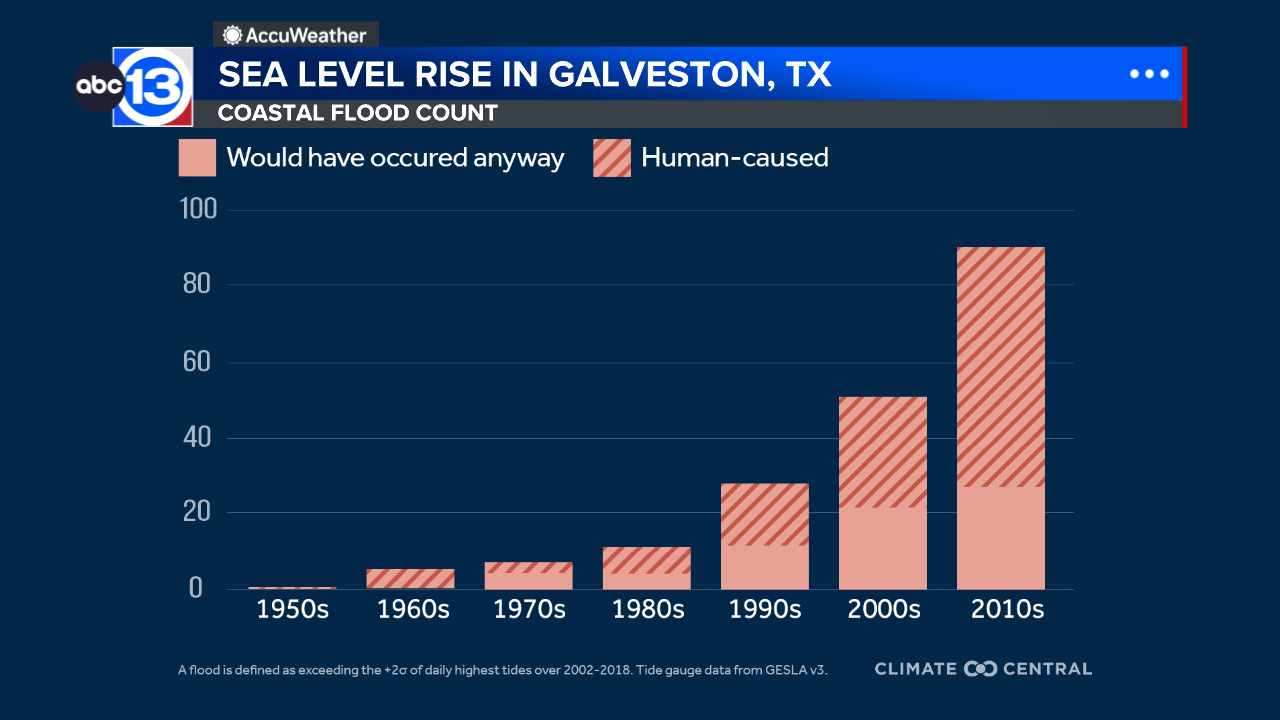
Researchers told ABC13 that roughly 70% of days with high water along the coastline would not have been present without human-caused sea level rise. Take data for this location at the Galveston Pier. It shows how human-caused sea level rise has more than tripled the number of coastal floods along Galveston Island, especially since the turn of the century.
And it's not just about the extreme flood events, but the number of days when communities from Surfside Beach to the Strand are stuck with water in local streets due to hide tide flooding. Locals call this "sunny day flooding," when high tides lead to flooding without the presence of a tropical system, showers, or storms.
This means flooding could become more prevalent on any given day. Then, during those extreme events, the impacts can be far greater. For instance, storm surge. Sea level rise can increase the level of surge as a tropical storm or hurricane roars ashore.
Furthermore, and unique to the Houston area, researcher Tom Di Liberto tells ABC13 that sea level rise local to the Southeast Texas area isn't just based on water. He points to subsidence, or how much the ground is sinking, as another major contributing factor. That said, the waterline is now 5.8 inches higher in Galveston than it was in 1900.