Texas wildflowers impacted by drought, leads to patchy, shorter season


HOUSTON, Texas (KTRK) -- 'Tis the season! Wildflowers are in bloom across the region, but this year's annual event might not be as plentiful or last as long. ABC13 Meteorologist Elyse Smith explains how the weather can impact the spring bloom of wildflowers in Texas.
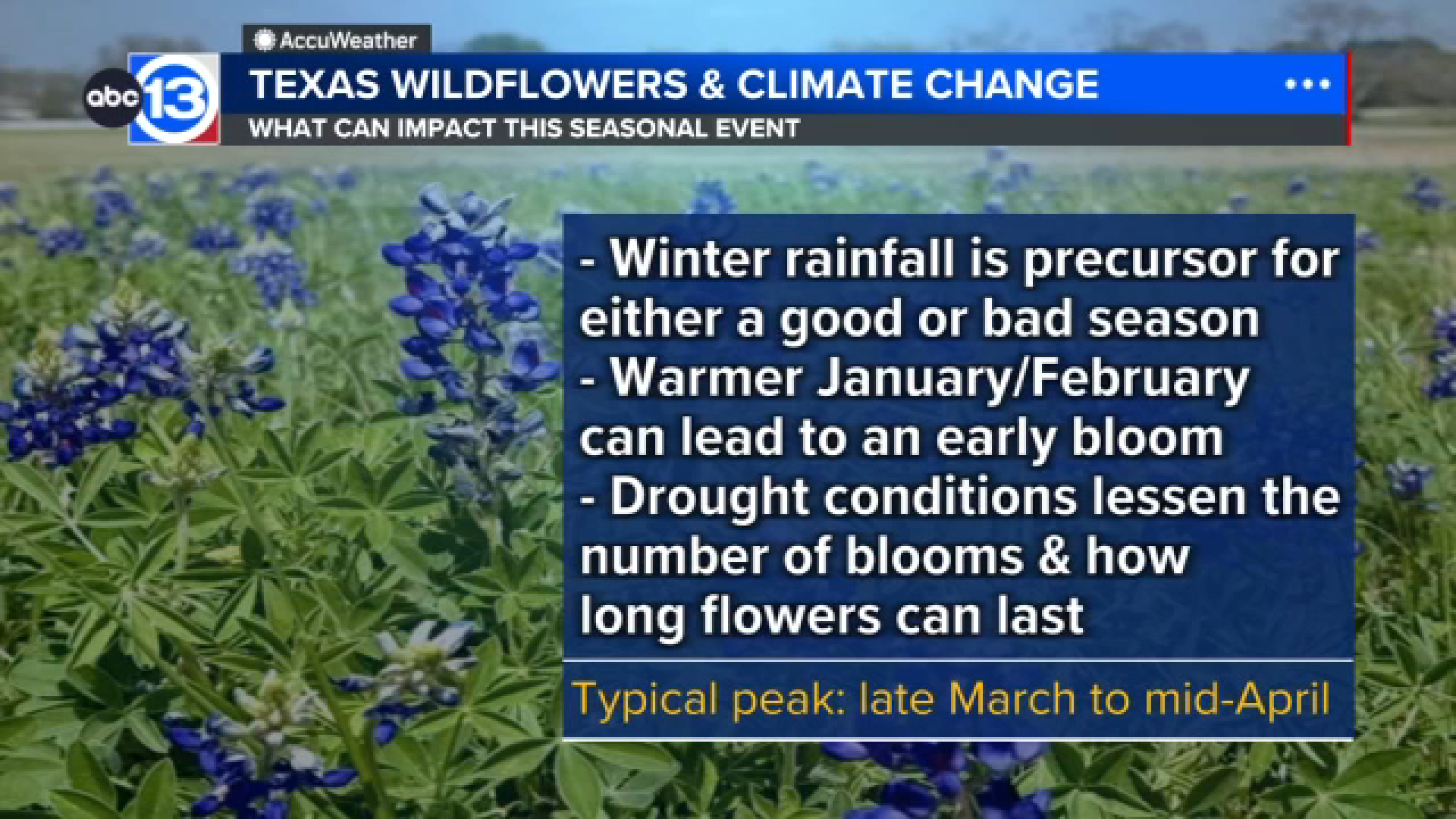
One of the primary drivers for how vibrant the Texas spring wildflower bloom will be happens even before the season begins. And that is based on how much precipitation falls during the winter.
Last year's spring wildflower season was one for the ages, thanks to the rare January snowstorm and wet wintertime months. For 2026, Houston is well behind on rainfall, so much so that drought conditions have worsened since January.
As of April 7, most of southeast Texas is in either a severe or extreme drought. Severe drought conditions can both reduce the number of blooms and shorten how long flowers last.
Another is how fast temperatures warm later in winter. According to Texas A&M AgriLife, flowers begin to bud when ground temperatures are consistently in the mid-50s for at least three weeks. So, faster warming conditions after winter mean an earlier spring bloom. So when thinking about how climate change and the gradual warming of the Earth's atmosphere, the peak of the Texas spring wildflower season could move up in years to come.
The best time to view springtime flowers such as bluebonnets, sunflowers, and the native blue agave is right now, from late March to mid-April. This is traditionally when spring wildflowers are in peak bloom. However, flowers can begin to bloom as early as February and continue through June. And while the weather conditions can impact when and how many flowers bloom, nothing can completely stop these flowers from blooming every year. They're resilient and an annual, seasonal event.